

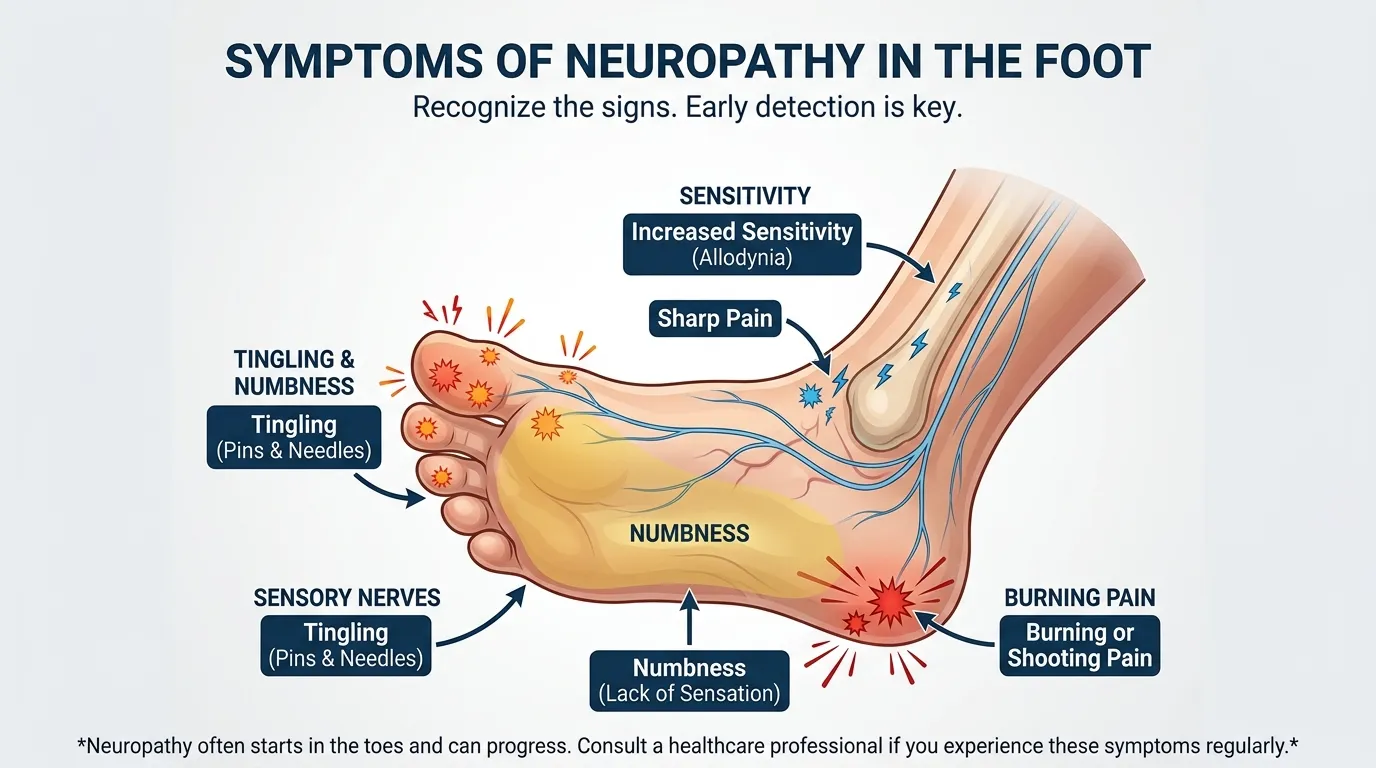
Neuropathy in the foot symptoms often include tingling, numbness, burning pain, and muscle weakness that typically begin in the toes and gradually spread upward. Common causes include diabetes, vitamin deficiencies, injuries, and certain medical conditions. Early diagnosis and treatment can help manage symptoms, slow nerve damage, and improve quality of life.
Neuropathy in the foot causes tingling, numbness, burning pain, and muscle weakness, often starting in the toes and spreading upward. Early signs include a “pins and needles” feeling, sensitivity to touch, and loss of balance. Diabetes is the most common cause, but injuries, infections, and vitamin deficiencies can also damage foot nerves.
That strange tingling in your toes might be more than a foot that’s fallen asleep. For millions of people, it’s the first warning sign of neuropathy—nerve damage that can quietly progress if left unchecked.
Foot neuropathy affects how your nerves send signals between your feet and your brain. When those nerves get damaged, you might feel pain where there shouldn’t be any, or no feeling at all in places that should be sensitive. Catching these symptoms early can make a real difference in how well you manage the condition.
This guide breaks down the symptoms of foot neuropathy, what causes them, and what you can do about it. You’ll learn how to spot the early signs, understand why nerve damage happens, and explore both medical and natural treatment options.
What Are the Symptoms of Foot Neuropathy?
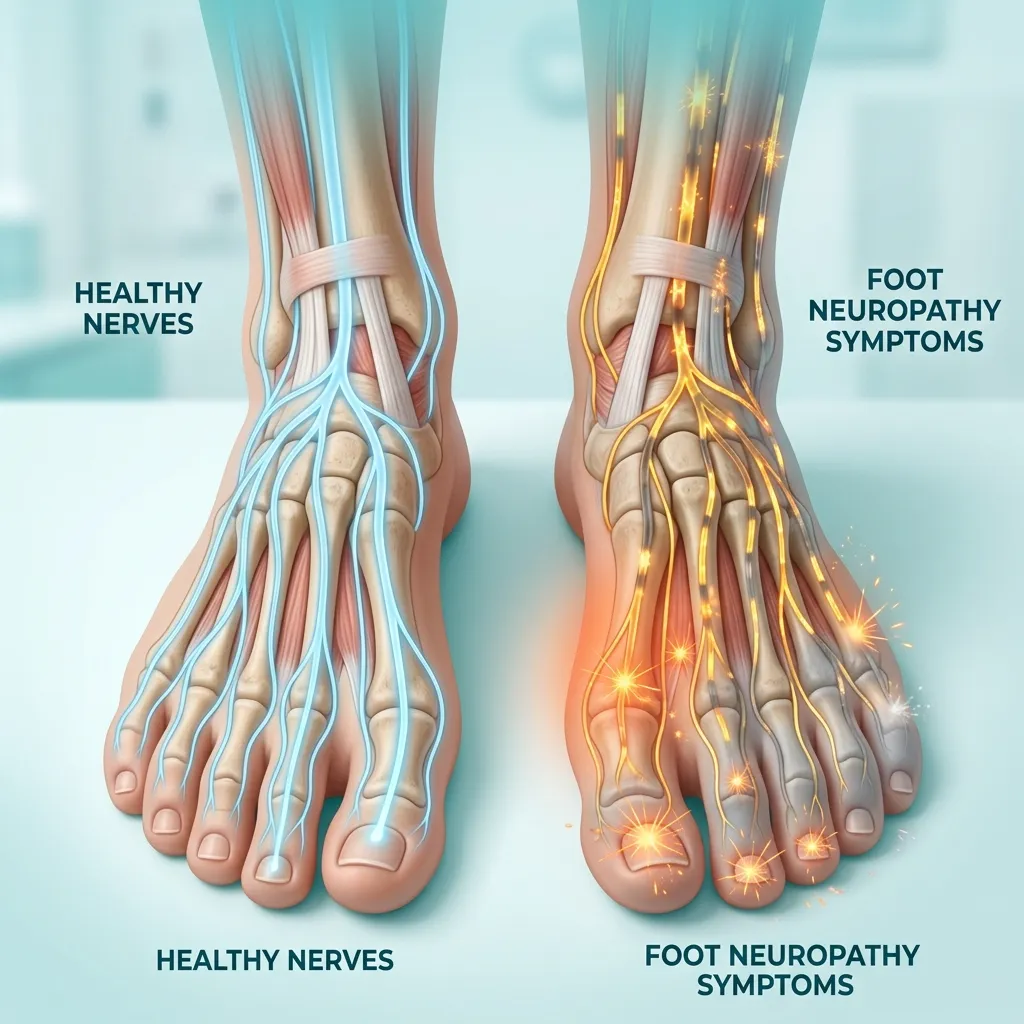
Foot neuropathy doesn’t always announce itself loudly. Symptoms often build slowly, which is why many people dismiss them at first.
The most common symptoms include:
- Tingling or “pins and needles” that come and go, then become more frequent
- Numbness that makes it hard to feel your feet, especially the toes
- Burning or sharp pain, often worse at night
- Sensitivity to touch, where even a bedsheet feels painful
- Muscle weakness in the feet or ankles
- Loss of balance and coordination when walking
- Feeling like you’re wearing socks when you’re barefoot
These symptoms usually start in the toes and move upward over time. This pattern is sometimes called a “stocking and glove” distribution, because it can eventually affect the hands too.
What Are the Signs of Peripheral Neuropathy in the Feet?
Peripheral neuropathy refers to damage in the nerves outside your brain and spinal cord. Since the longest nerves in your body run all the way down to your feet, they’re often the first to show problems.
Signs of peripheral neuropathy in the feet fall into three categories, based on the type of nerve affected:
Sensory Nerve Signs
These nerves control what you feel. When they’re damaged, you might notice numbness, tingling, burning, or stabbing pain. Some people lose the ability to feel temperature changes, which makes them prone to burns or frostbite without realizing it.
Motor Nerve Signs
Motor nerves control movement. Damage here leads to muscle weakness, cramping, twitching, and difficulty walking. Over time, the small muscles in the feet can shrink, changing the shape of your foot.
Autonomic Nerve Signs
Autonomic nerves manage automatic functions like sweating. When affected, your feet may become unusually dry or sweat too much, and the skin may change color or temperature.
What Are the Early Signs of Nerve Damage in the Feet?
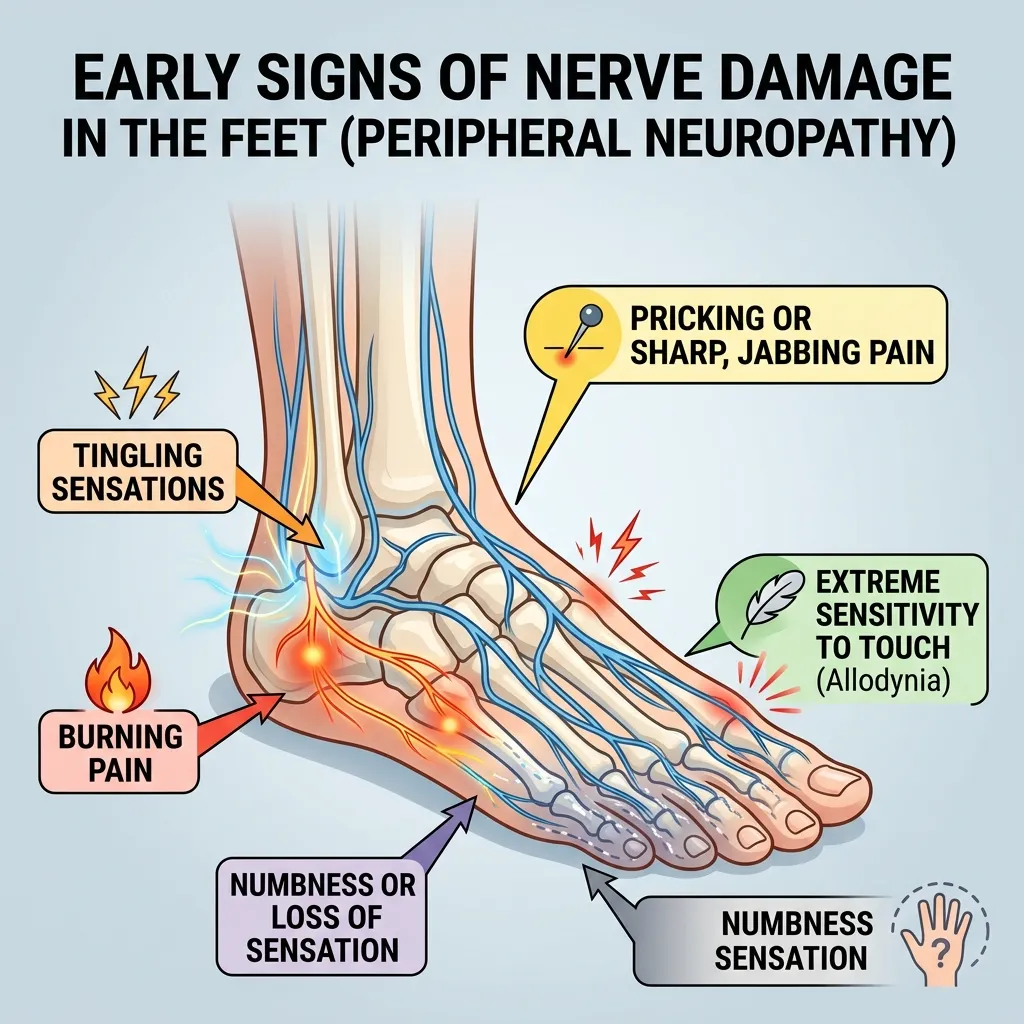
Spotting nerve damage early gives you the best shot at slowing it down. The trouble is that early symptoms are easy to overlook.
Watch for these early warning signs:
- Occasional tingling in the toes that you can’t explain
- A slight numbness that fades but keeps coming back
- Increased sensitivity in your feet, especially at night
- Mild burning after standing or walking for long periods
- Feeling unsteady on your feet without an obvious reason
If you notice any of these signs lasting more than a few weeks, it’s worth talking to a doctor. Early treatment often focuses on stopping the damage from getting worse.
What Are the Symptoms of Diabetic Neuropathy in the Feet?
Diabetes is the leading cause of foot neuropathy. High blood sugar over time damages the tiny blood vessels that feed your nerves, starving them of oxygen and nutrients.
Diabetic neuropathy in the feet often shows up as:
- Persistent numbness or reduced ability to feel pain
- Burning or shooting pains, especially overnight
- Tingling that won’t go away
- Foot ulcers or sores that heal slowly
- Changes in foot shape or skin
The dangerous part of diabetic neuropathy is the loss of sensation. When you can’t feel a cut, blister, or sore, it can become infected before you notice. This is why people with diabetes are advised to check their feet daily and wear protective footwear.
If you have diabetes and notice any foot symptoms, keeping your blood sugar in a healthy range is one of the most effective ways to protect your nerves.
What Causes Burning Feet and Nerve Pain?
Burning feet can feel like your soles are on fire, and it’s one of the most distressing neuropathy symptoms. Several things can trigger it.
Common causes of burning feet and nerve pain include:
- Diabetes and high blood sugar
- Vitamin deficiencies, particularly B12, B6, and folate
- Alcohol use, which can be toxic to nerves over time
- Kidney disease, which lets toxins build up in the body
- Thyroid problems that disrupt nerve function
- Infections like shingles or Lyme disease
- Exposure to toxins or certain medications, including some chemotherapy drugs
Sometimes burning feet have no clear cause, which doctors call idiopathic neuropathy. Even then, treatments can help manage the discomfort.
How Is Tingling and Numbness in the Feet Treated?
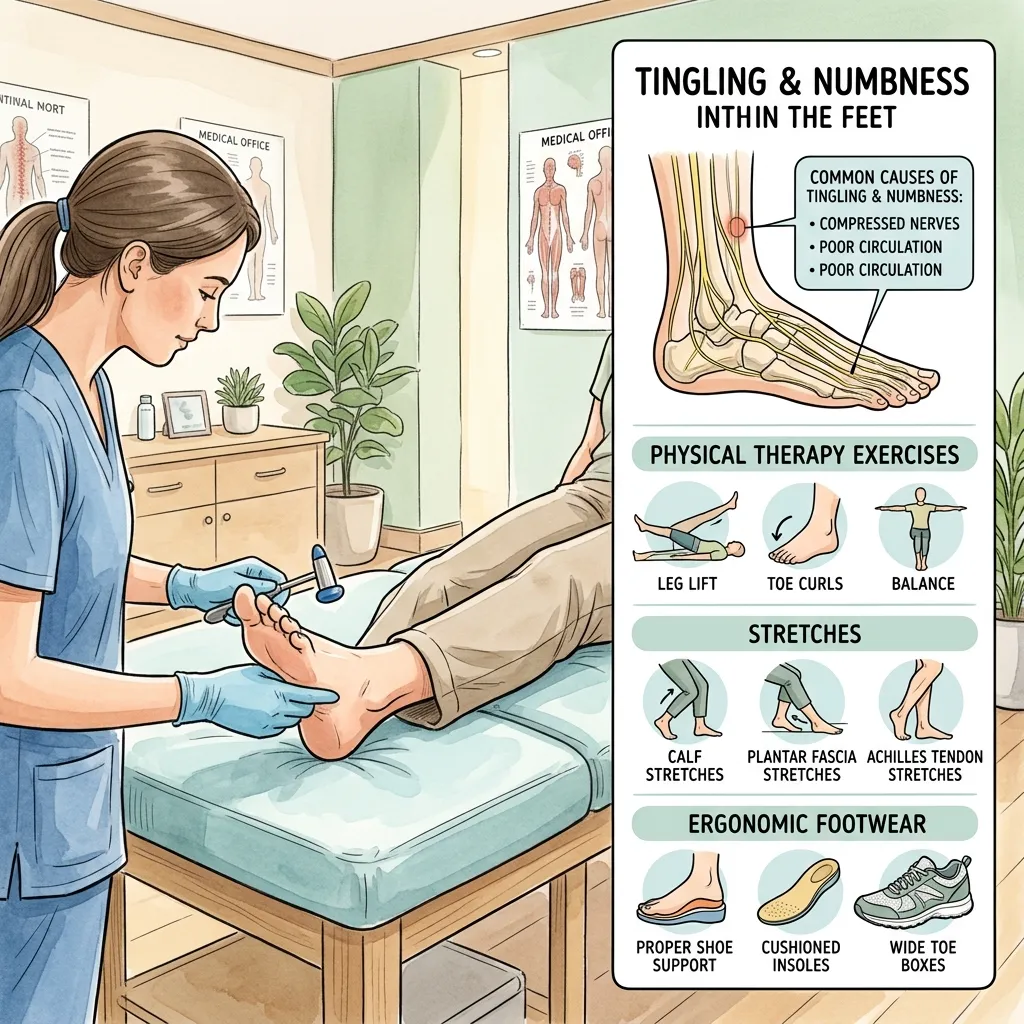
Treatment depends on the underlying cause, so the first step is always a proper diagnosis. A doctor may run blood tests, nerve conduction studies, or imaging to find the source.
Once the cause is known, treatment usually combines a few approaches:
Treating the Root Cause
If diabetes is the culprit, controlling blood sugar is key. If a vitamin deficiency is to blame, supplements can help. Addressing the cause can sometimes stop symptoms from progressing.
Managing the Pain
Doctors may prescribe medications such as:
- Certain antidepressants that calm nerve pain
- Anti-seizure drugs like gabapentin or pregabalin
- Topical treatments such as lidocaine patches or capsaicin cream
Physical Therapy
Targeted exercises can improve strength, balance, and circulation. This helps reduce falls and keeps your feet working as well as possible.
Why Does Foot Neuropathy Cause Pain and Weakness?
Foot nerve pain and weakness happen for different reasons, but both come down to damaged nerves failing to do their job.
Pain occurs when sensory nerves misfire. Instead of sending normal signals, damaged nerves send confused messages that your brain reads as burning, stabbing, or electric shocks—even when nothing is touching your feet.
Weakness happens when motor nerves can’t properly tell your muscles to contract. The muscles get weaker, and over time they may shrink. This can lead to foot drop, where it becomes hard to lift the front part of your foot, making you more likely to trip.
What Causes Neuropathy in the Lower Limbs?
Neuropathy in the legs and feet has many possible causes. Understanding yours is the foundation of effective treatment.
The most common causes include:
- Diabetes — by far the leading cause worldwide
- Vitamin deficiencies — especially B vitamins
- Alcohol-related nerve damage
- Autoimmune diseases like rheumatoid arthritis and lupus
- Infections such as shingles, HIV, and Lyme disease
- Physical injury or pressure on nerves, including herniated discs
- Inherited conditions like Charcot-Marie-Tooth disease
- Exposure to toxins and certain medications
- Tumors that press on nerves
In some cases, more than one factor is at play. A doctor can help untangle which causes apply to you.
Nerve Damage in the Feet: Symptoms and Causes at a Glance
To pull it all together, here’s how symptoms connect to common causes:
|
Symptom |
Possible Cause |
|---|---|
|
Numbness and tingling |
Diabetes, B12 deficiency |
|
Burning pain |
Diabetes, alcohol use, infections |
|
Muscle weakness |
Motor nerve damage, inherited conditions |
|
Slow-healing sores |
Diabetic neuropathy |
|
Dry skin or sweating changes |
Autonomic nerve damage |
Recognizing the link between what you feel and what’s behind it can help you have a more productive conversation with your doctor.
How Can You Treat Neuropathy in the Feet Naturally?
Natural approaches won’t replace medical care, but they can support your treatment and ease symptoms. Many people find relief by combining these with their doctor’s plan.
Natural ways to manage foot neuropathy include:
- Regular exercise, which boosts blood flow to the nerves and helps control blood sugar
- A balanced diet rich in B vitamins, antioxidants, and whole foods
- Quitting smoking, since smoking narrows blood vessels and worsens circulation
- Limiting alcohol, which is toxic to nerves
- Warm foot baths to soothe pain and improve circulation
- Gentle massage to relax muscles and stimulate blood flow
- Good foot care, including daily checks and well-fitting shoes
- Stress management through practices like meditation or yoga
Some people also explore supplements like alpha-lipoic acid or acetyl-L-carnitine, but you should talk to your doctor before starting any supplement, especially if you take other medications.
Taking the Next Step Toward Healthier Feet
Foot neuropathy symptoms—tingling, numbness, burning, and weakness—are your body’s way of signaling that something needs attention. The sooner you act, the more options you’ll have to slow the damage and protect your quality of life.
Start by paying attention to what your feet are telling you. If you notice ongoing symptoms, book an appointment with your doctor to find the cause. From there, you can build a plan that combines medical treatment with lifestyle changes that support nerve health.
Your feet carry you through life. Giving them the care they need today can help keep you moving comfortably for years to come.
Frequently Asked Questions
Can foot neuropathy be reversed?
It depends on the cause. If nerve damage comes from a treatable issue like a vitamin deficiency, addressing it may reverse some symptoms. Damage from long-term conditions like diabetes is often permanent, but treatment can stop it from getting worse and manage the symptoms.
What does the start of neuropathy feel like?
Early neuropathy often feels like occasional tingling or “pins and needles” in the toes. You might notice mild numbness that comes and goes, or a slight burning sensation after standing for a while. These early signs are easy to miss, so pay attention if they keep returning.
When should I see a doctor about foot numbness?
See a doctor if numbness or tingling lasts more than a few weeks, gets worse, or spreads. Seek prompt care if you have diabetes, notice sores that won’t heal, or experience sudden weakness. Early diagnosis gives you the best chance to protect your nerves.
Is walking good for neuropathy in the feet?
Yes, gentle walking can help. Exercise improves blood flow to the nerves and helps manage blood sugar, which is important for people with diabetes. Wear supportive, well-fitting shoes and start slowly. If walking causes pain, talk to your doctor about safe options.
What vitamin deficiency causes neuropathy in the feet?
Vitamin B12 deficiency is a common cause of foot neuropathy. Low levels of vitamin B6, B1, vitamin E, and folate can also contribute. A simple blood test can check your levels, and supplements may help if a deficiency is found.
What are the most common neuropathy in the foot symptoms?
The most common neuropathy in the foot symptoms include tingling, numbness, burning sensations, sharp pain, muscle weakness, and balance problems.
What causes neuropathy in the feet?
Diabetes is the leading cause, but neuropathy can also result from vitamin deficiencies, alcohol misuse, infections, injuries, autoimmune disorders, and certain medications.
What are the early signs of foot neuropathy?
Early signs include occasional tingling, mild numbness in the toes, increased sensitivity to touch, and a “pins and needles” sensation that comes and goes.
Can neuropathy in the feet be reversed?
Some cases caused by treatable conditions, such as vitamin deficiencies, may improve or partially reverse. However, long-term nerve damage often requires ongoing management.
Is burning foot pain a symptom of neuropathy?
Yes. Burning feet are one of the most common neuropathy in the foot symptoms and may worsen at night or after prolonged activity.
How is foot neuropathy diagnosed?
Doctors may use physical exams, blood tests, nerve conduction studies, imaging tests, and medical history reviews to diagnose neuropathy.
Can diabetes cause nerve damage in the feet?
Yes. Diabetic neuropathy is one of the most common forms of nerve damage and can lead to numbness, pain, weakness, and foot ulcers.
Is walking good for foot neuropathy?
Moderate exercise, including walking, can improve circulation, support nerve health, and help manage neuropathy symptoms when done safely.
What vitamins help with neuropathy in the feet?
Vitamin B12, B1, B6, vitamin E, and folate play important roles in nerve function and may help if a deficiency is contributing to symptoms.
When should I see a doctor about neuropathy in the foot symptoms?
You should seek medical advice if symptoms persist, worsen over time, affect daily activities, cause weakness, or if you have diabetes and notice any changes in your feet.