

In today’s digital landscape, the need for secure, efficient data exchange across healthcare providers has never been more critical. This year, hospitals, clinics, and research centers grapple with fragmented systems, siloed records, and manual workflows that hinder timely patient care. Enter AI-driven interoperability—a transformative approach that leverages machine learning, natural language processing, and predictive analytics to unite disparate health information systems. By embedding intelligence into data pipelines, organizations can automate mapping, improve semantic understanding, and strengthen security in real time.
As healthcare networks evolve, the demand for seamless integration extends beyond electronic health records (EHRs) to medical imaging, laboratory reports, wearable devices, and telehealth platforms. Traditional standards such as HL7 FHIR and DICOM lay the foundation, but only an AI-empowered framework can fill gaps, accelerate decision making, and reduce administrative burdens. In this comprehensive guide, we explore how AI-driven interoperability is reshaping patient-centric care, driving operational efficiency, and enabling predictive insights at scale. Whether you oversee IT infrastructure, clinical operations, or data governance, understanding these innovations will help you build a resilient, future-ready ecosystem.
What Is AI-Driven Interoperability?
AI-driven interoperability refers to the use of artificial intelligence techniques to facilitate the automated exchange, interpretation, and utilization of healthcare data across diverse systems and organizations. Unlike conventional data integration—often reliant on manual coding, fixed interfaces, and batch file transfers—this approach harnesses advanced algorithms to dynamically reconcile differences in data formats, medical terminology, and workflow requirements.
Key components include:
- Intelligent Data Mapping: AI models automatically detect field-level discrepancies between source and target systems. Algorithms learn from historical matches to normalize entries—such as medication names or lab results—ensuring accuracy without manual intervention.
- Semantic Processing: Natural language processing (NLP) engines convert unstructured clinical narratives into structured datasets. Clinician notes, pathology reports, and discharge summaries are indexed using standardized vocabularies like SNOMED CT, fostering uniform understanding across electronic records.
- Predictive Routing: Machine learning monitors usage patterns and network performance, directing critical data—such as emergency alerts or imaging studies—to the appropriate care team based on context and workload.
- Adaptive Security: Real-time anomaly detection flags unauthorized access or unusual data flows. AI-driven encryption and tokenization protect patient information from end to end, automatically adjusting policies to mitigate emerging threats.
By augmenting existing interoperability standards—such as HL7 FHIR, CDA, and DICOM—AI-driven interoperability creates a dynamic, resilient communication layer. This enables healthcare entities to share information quickly, accurately, and securely, improving patient outcomes while reducing administrative overhead.
Benefits of AI-Driven Interoperability in Health Networks

Adopting AI-driven interoperability yields tangible advantages across clinical, operational, and financial domains. Providers harness intelligent automation to accelerate care delivery, minimize errors, and optimize resource utilization.
Enhanced Patient Safety: Rapid, accurate sharing of lab results, imaging studies, and medication histories reduces the risk of diagnostic delays and adverse drug interactions. Clinicians gain a holistic view of patient status, enabling timely interventions and improved care coordination.
Operational Efficiency: Automated workflows streamline admissions, referrals, and discharge planning. Administrative teams are relieved from repetitive data-entry tasks, freeing staff to focus on patient-facing responsibilities. Real-time data availability also accelerates reporting and compliance activities.
Cost Reduction: By eliminating redundant tests and preventing unnecessary readmissions, organizations realize significant savings. Predictive analytics identify high-risk patient cohorts, enabling targeted preventive measures that curb long-term expenses.
Data-Driven Insights: Consolidated, high-quality datasets feed analytics platforms for population health management, risk stratification, and personalized treatment plans. Institutions can collaborate with research universities—such as National Institutes of Health—to drive clinical studies without compromising privacy.
Scalability and Flexibility: AI architectures adapt to new endpoints—wearable sensors, remote monitoring devices, or telemedicine portals—without extensive redevelopment. Event-driven frameworks using platforms like Apache Kafka facilitate real-time ingestion of streaming data.
These benefits demonstrate how integrating AI-driven interoperability transforms fragmented networks into cohesive, intelligent systems that enhance patient care and organizational performance.
Key Strategies for Implementing AI-Driven Interoperability

Successful adoption of AI-driven interoperability requires a structured roadmap that aligns technology, governance, and stakeholder engagement. The following strategic pillars can guide organizations through deployment.
Data Governance and Standardization
Establishing a robust governance framework is foundational. Define data ownership, quality metrics, and security policies. Adopt widely accepted standards such as HL7 FHIR for clinical data, DICOM for imaging, LOINC for lab codes, and SNOMED CT for standardized terminology. Conduct thorough audits to identify inconsistencies and gaps in legacy datasets. Implement master data management (MDM) solutions to maintain a single patient identity across all systems. Leverage AI-driven data cleansing tools to detect anomalies and fill missing values, ensuring that downstream processes operate on reliable information.
API-First Architecture
Designing an API-centric ecosystem provides the flexibility needed for AI integration. Develop RESTful, FHIR-compliant endpoints to expose patient records, care events, and clinical documents. Use GraphQL for complex queries that span multiple data domains. Deploy event-driven services using protocols like MQTT or Apache Kafka to ingest telemetry from IoT devices and remote monitoring solutions. This modular approach allows AI models to tap real-time feeds, enabling dynamic data transformations, predictive routing, and instant decision support.
AI-Enhanced Middleware
Middleware acts as the orchestrator, connecting EHRs, imaging systems, lab information systems, and analytics platforms. Embed AI modules within the middleware layer to perform tasks such as HL7-to-FHIR conversion, NLP-based extraction of clinical insights, and automated terminology mapping. Context-aware routing engines can evaluate patient acuity, physician availability, and resource constraints to direct alerts and referrals to the right recipients at the right time.
Adaptive Security and Compliance
Regulatory compliance with HIPAA, GDPR, and other regional mandates is non-negotiable. Integrate AI-driven user behavior analytics (UBA) to continuously monitor access patterns and detect suspicious activity. Employ automated encryption key management that rotates keys based on threat intelligence feeds. Implement role-based access controls (RBAC) augmented by dynamic risk scoring, ensuring that only authorized personnel access sensitive fields. When sharing de-identified or aggregated datasets for research, leverage differential privacy techniques to maintain confidentiality.
Real-World Applications, Challenges, and Future Directions
Several leading healthcare organizations have already unlocked the potential of AI-driven interoperability to drive measurable outcomes.
Accelerating Clinical Documentation with NLP
A major metropolitan health system deployed an NLP engine to scan physician notes and extract structured problem lists, medication changes, and vital signs. Integrated through an AI-enhanced middleware platform, the solution reduced chart review time by over 35% and cut transcription errors by nearly 30%. Clinicians now access concise summaries directly within their EHR, improving diagnostic accuracy and speeding up treatment planning.
Optimizing Laboratory Network Throughput
A regional laboratory consortium implemented machine learning models to analyze historical specimen volumes, turnaround times, and staffing levels. The AI-driven scheduler rebalanced workloads across four labs in real time, improving average result delivery by three hours and reducing courier expenses by 20%. This dynamic routing also enhanced capacity planning and minimized bottlenecks during peak testing periods.
These examples illustrate how AI-driven interoperability not only streamlines existing workflows but also fosters collaboration with academic and government institutions. For example, partnerships with Centers for Disease Control and Prevention enhance public health surveillance by feeding de-identified data into nationwide reporting systems.
While the promise of AI-driven interoperability is compelling, organizations must navigate several obstacles to achieve sustainable success.
Bridging Legacy Silos
Many care providers still rely on aging systems that lack modern interfaces. Custom adapters and robotic process automation (RPA) can help extract data where APIs are unavailable. A phased modernization strategy—prioritizing high-impact systems—ensures business continuity while gradually replacing outdated platforms.
Workforce Education and Adoption
Effective change management is essential. Establish centers of excellence comprising clinicians, informaticists, and IT specialists to co-design AI-driven workflows. Provide hands-on training, pilot programs, and feedback loops to build user confidence and refine system behavior based on real-world insights.
Navigating Regulatory Complexity
Data privacy laws continue to evolve. Proactive engagement with compliance officers during solution design helps anticipate regulatory changes. Implement AI tools that automatically audit data schemas and logs, flagging potential violations before they escalate into breaches or fines.
Emerging Innovations
Edge AI and IoT: Wearable sensors and point-of-care devices running AI models at the edge deliver insights directly into clinical workflows.
Blockchain Integration: Distributed ledgers ensure immutable audit trails and secure data provenance across network partners.
Federated Learning: Collaborative AI models train on decentralized data sources, enhancing predictive accuracy without sharing raw patient records.
Precision Medicine: Genomic and biomarker data integrated through AI pipelines enable real-time treatment adjustments, paving the way for truly personalized care.
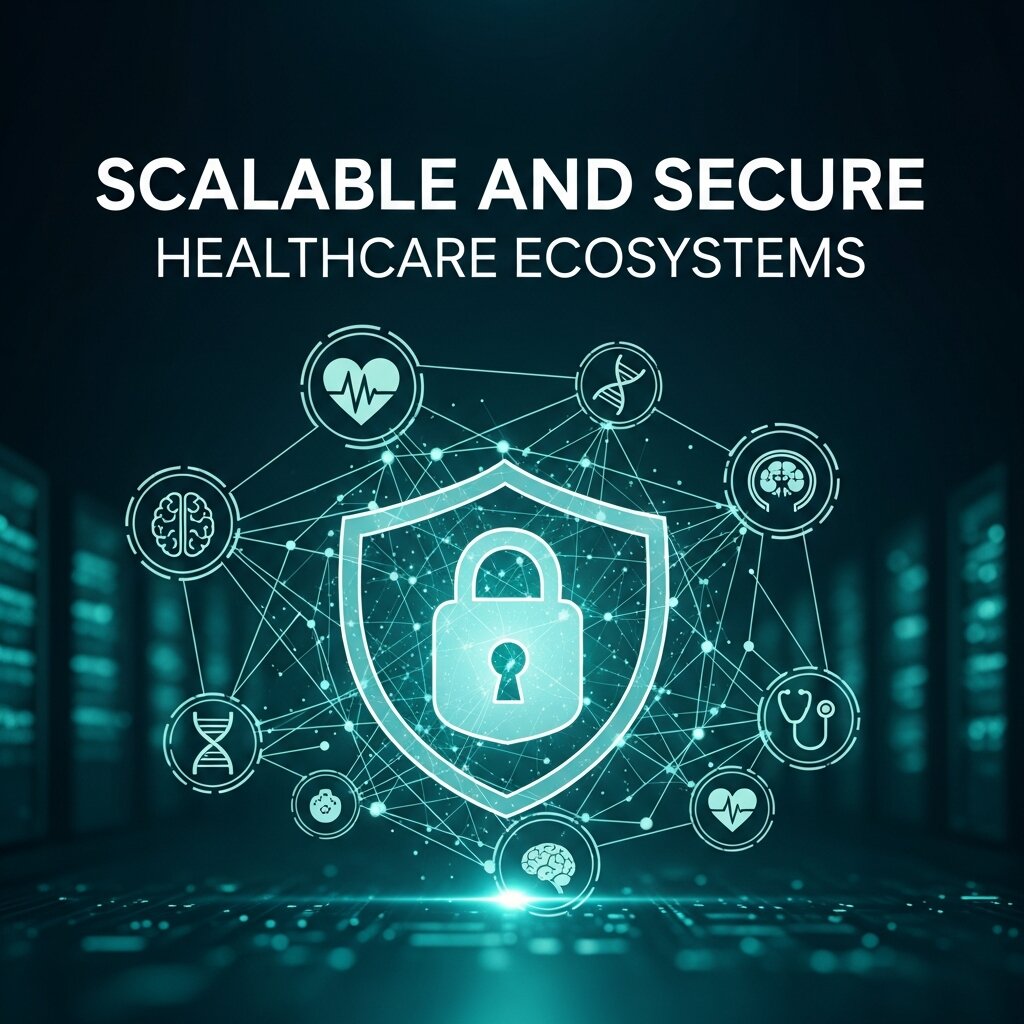
AI-driven interoperability stands at the forefront of healthcare innovation in 2026, empowering providers to overcome data silos, accelerate workflows, and deliver personalized patient care. By uniting intelligent data mapping, semantic analysis, predictive routing, and adaptive security, organizations can build a resilient ecosystem that scales with evolving demands. Success requires a holistic approach—strong governance, API-first design, AI-embedded middleware, and robust compliance frameworks. As edge computing, blockchain, and federated learning mature, the next wave of interoperability will usher in smarter diagnostics, real-time collaboration, and precision therapies. Embracing these advances today positions health networks for sustained excellence in patient outcomes, operational efficiency, and cost management. The journey to AI-driven interoperability begins with strategic planning and continuous iteration—unlocking a future where data truly becomes the lifeblood of coordinated, patient-centric care.
FAQ
1. How does AI-driven interoperability differ from traditional integration?
AI-driven interoperability goes beyond fixed interfaces and manual mappings by using machine learning to dynamically adapt to new data formats and workflows. It continuously learns from data patterns, improving accuracy and efficiency over time, unlike traditional systems that require constant manual updates and maintenance.
2. What technologies power AI-driven interoperability?
Core technologies include machine learning, natural language processing (NLP), and predictive analytics. These tools enable automated data mapping, semantic understanding, and intelligent routing. Together, they transform raw healthcare data into actionable insights while ensuring seamless communication across multiple platforms and systems.
3. How does NLP improve healthcare data exchange?
Natural language processing converts unstructured clinical text into structured, standardized data. It extracts key information from physician notes, reports, and summaries, making it easier to share and analyze. This improves interoperability by ensuring consistent interpretation of medical information across different healthcare systems.
4. Can AI-driven interoperability reduce administrative workload?
Yes, it significantly reduces administrative burden by automating repetitive tasks such as data entry, coding, and record matching. Staff can focus more on patient care instead of manual processes, leading to improved productivity, fewer errors, and more efficient healthcare operations overall.
5. How does AI improve decision-making in healthcare networks?
AI analyzes large volumes of integrated data to identify patterns, predict risks, and recommend actions. Clinicians receive real-time insights that support faster and more accurate decisions, improving diagnosis, treatment planning, and patient outcomes across interconnected healthcare environments.
6. Is AI-driven interoperability scalable for growing healthcare systems?
AI-driven systems are highly scalable, adapting to new data sources such as wearable devices, telehealth platforms, and additional facilities. Cloud-based architectures and modular APIs allow organizations to expand their networks without major infrastructure changes or disruptions.
7. What role does predictive analytics play in interoperability?
Predictive analytics identifies trends and forecasts future health events by analyzing historical and real-time data. It enables proactive care, early intervention, and resource optimization, helping healthcare providers manage patient populations more effectively and reduce overall healthcare costs.
8. How does AI enhance data security in healthcare networks?
AI strengthens security by detecting anomalies, monitoring user behavior, and identifying potential threats in real time. It can automatically adjust security protocols, enforce access controls, and prevent breaches, ensuring sensitive patient data remains protected across all connected systems.
9. What industries benefit from AI-driven interoperability beyond hospitals?
Beyond hospitals, industries such as research institutions, insurance companies, telehealth providers, and public health organizations benefit. Improved data exchange supports clinical trials, claims processing, remote care delivery, and large-scale health monitoring initiatives.
10. What is the future of AI-driven interoperability in healthcare?
The future includes deeper integration with edge computing, blockchain, and federated learning. These advancements will enable secure, decentralized data sharing, real-time analytics, and personalized treatments, making healthcare more predictive, efficient, and patient-centered in the coming years.