
In today’s digital landscape, health systems are under increasing pressure to deliver efficient, high-quality care while managing costs and regulatory requirements. Digital integration strategies have emerged as a vital solution this year (2026), enabling providers, payers, and technology vendors to break down data silos and create cohesive health networks. By leveraging cutting-edge platforms and standards, organizations can access real-time patient information, streamline workflows, and enhance collaboration across primary care, specialty services, and post-acute settings. In this introduction, we’ll explore why implementing robust digital integration strategies is essential for achieving better clinical outcomes, reducing administrative burdens, and fostering innovation in health delivery.
Why Digital Integration Strategies Matter in Health Networks
Health networks have historically relied on fragmented systems that impede timely access to patient data and drive up operational costs. Today, many organizations face incompatible electronic health record (EHR) systems, manual data entry processes, and disjointed communication channels. These obstacles can lead to delayed diagnoses, duplicated tests, and poor patient engagement. By adopting comprehensive digital integration strategies, stakeholders can establish centralized data repositories, automate routine tasks, and ensure clinicians have the information they need when they need it.
Currently, integrated data pathways support coordinated care plans, reducing gaps between inpatient and outpatient settings. For example, a patient’s lab results, imaging studies, and medication history can be accessed instantly at any point of care. This holistic view not only improves clinical decision-making but also decreases readmission rates and prevents unnecessary procedures. Moreover, digital integration enables population health management by aggregating anonymized data to identify trends, allocate resources effectively, and target preventive interventions.
Administrators benefit from process optimization as automated billing, scheduling, and reporting replace manual tasks that once consumed countless staff hours. Enhanced operational efficiency translates into cost savings that can be redirected toward patient-facing services and innovation. At the same time, patients enjoy smoother experiences through online appointment booking, digital check-ins, and virtual consultations—features that drive engagement and satisfaction. In short, digital integration strategies serve as the backbone of a resilient, patient-centered health network designed to meet the challenges of modern care delivery.
Cutting-Edge Technologies Shaping Modern Health Ecosystems

Implementing digital integration strategies relies on a suite of technologies that enable seamless data exchange and analytics. Central to these efforts are Electronic Health Records (EHRs), which store clinical, demographic, and financial information in a unified platform. Leading EHR solutions provide APIs for interoperability, support cloud-based deployment models, and incorporate decision-support tools to guide evidence-based care.
Health Information Exchanges (HIEs) extend connectivity across organizations by serving as secure intermediaries for cross-system data sharing. Many state and regional networks leverage guidelines and funding from HealthIT.gov to build HIE infrastructure that meets federal interoperability mandates. Through HIEs, providers can query patient summaries, medication histories, and laboratory reports in real time, reducing delays in treatment and improving emergency care coordination.
Application Programming Interfaces (APIs) are another cornerstone of digital integration strategies. Using RESTful principles, APIs facilitate secure communication between EHRs, patient apps, analytics platforms, and third-party tools. The HL7 FHIR standard, in particular, has gained traction for its modern architecture and flexibility. Cloud computing complements these elements by offering scalable storage, high-performance computing for big data analytics, and reliable backup services.
Mobile health (mHealth) applications and remote monitoring devices capture patient-generated data—such as vital signs and activity levels—and feed it into clinical systems. By integrating wearable sensors and telehealth platforms, networks can monitor chronic conditions, detect early warning signs, and deliver interventions without requiring in-person visits. Collectively, these technologies underpin a connected ecosystem where actionable insights are accessible anytime, anywhere.
Adopting Interoperability Standards for Seamless Data Exchange
Interoperability is the linchpin of successful digital integration strategies. Without standardized frameworks, disparate systems cannot communicate effectively, resulting in data loss, misinterpretation, and integration delays. Among the most influential standards today is HL7 FHIR (Fast Healthcare Interoperability Resources), which uses modern web technologies to exchange healthcare information via RESTful APIs. FHIR supports granular data access, allowing applications to retrieve specific resources, such as allergies or immunizations, in JSON or XML formats.
For medical imaging, the DICOM standard governs the handling, storage, and transmission of radiology files. DICOM ensures that scanners, picture archiving and communication systems (PACS), and diagnostic workstations share images reliably. Meanwhile, the Clinical Document Architecture (CDA) provides an XML-based structure for clinical documents, such as discharge summaries and progress notes. CDA complements FHIR by preserving document integrity and metadata.
Profiles from Integrating the Healthcare Enterprise (IHE) define how to implement these standards in real-world workflows. IHE profiles address scenarios like patient identity matching, secure message exchange, and cross-enterprise document sharing. By adhering to IHE guidelines, technology vendors certify compatibility with other products, reducing custom integration work and accelerating deployment timelines.
Government initiatives, including the Office of the National Coordinator for Health Information Technology (ONC), promote interoperability through certification programs and regulatory incentives. Providers who meet interoperability requirements can qualify for performance-based reimbursements under federal programs. Ultimately, embracing these standards not only reduces integration costs but also enhances patient safety and data quality.
Safeguarding Patient Data: Security and Compliance Practices
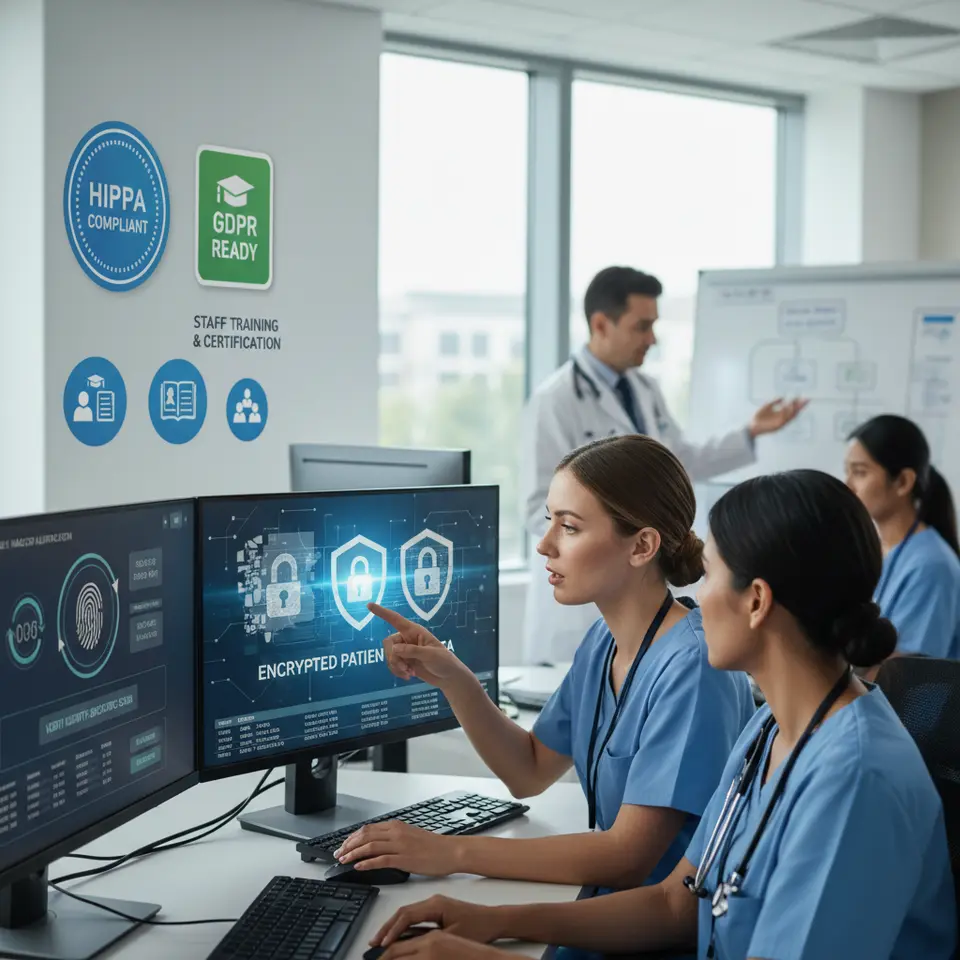
Protecting sensitive health information is paramount when deploying digital integration strategies. Compliance with regulations such as HIPAA in the United States and GDPR in regions with cross-border data flows is non-negotiable. Key measures begin with robust encryption protocols. Data must be encrypted both at rest and in transit using industry standards like AES for storage and TLS for network communications.
Access controls further strengthen security by enforcing role-based access control (RBAC). Under RBAC, users receive permissions tailored to their responsibilities, ensuring that only authorized personnel view or modify patient records. Implementing multi-factor authentication (MFA) adds another layer of defense against unauthorized access, reducing the risk of credential theft.
Comprehensive audit logging and monitoring are critical components of any digital integration strategy. Detailed logs record user activities, system events, and data exchanges, enabling security teams to detect anomalies and investigate potential breaches. Regular vulnerability assessments and penetration tests help identify weaknesses before malicious actors can exploit them.
Employee training completes the security framework. Ongoing education programs on phishing awareness, data handling best practices, and incident response protocols empower staff to act as the first line of defense. By fostering a culture of security mindfulness, organizations minimize human errors that often lead to data exposure.
Building Patient-Centered Health Networks
At the heart of effective digital integration strategies lies a patient-centric approach. Empowering individuals with convenient access to their health data and care tools enhances engagement and satisfaction. Patient portals and mobile apps serve as digital front doors, allowing secure appointment scheduling, prescription refill requests, and direct messaging with care teams.
Remote patient monitoring further personalizes care by continuously collecting biometric data from connected devices. Clinicians can track trends in blood pressure, glucose levels, or heart rate, and intervene proactively if readings fall outside safe thresholds. Such models of care reduce hospital readmissions and improve chronic disease management.
Analytics and predictive modeling enable the creation of personalized care plans. By analyzing demographic information, medical history, and social determinants of health, platforms can identify high-risk individuals and recommend tailored interventions. Feedback loops, incorporating patient-reported outcomes and satisfaction surveys, inform iterative improvements to clinical pathways.
Collaboration with academic institutions and research organizations—such as partnerships with the National Institutes of Health—can accelerate innovation. Data-driven clinical trials and real-world evidence studies thrive in integrated environments, leading to new therapies and best practices. Ultimately, patient-centered networks powered by digital integration strategies deliver coordinated, proactive care that meets the evolving needs of communities.
1. Why Digital Integration Strategies Matter
Digital integration strategies address fragmented systems in healthcare, enabling real-time data access and streamlined workflows. By centralizing data, automating tasks, and improving communication, these strategies enhance clinical decision-making, reduce costs, and improve patient engagement. They bridge gaps between inpatient and outpatient care, ensuring seamless transitions and better outcomes.
2. Technologies Driving Integration
Key technologies include EHRs, APIs, and HIEs, which enable secure data sharing and interoperability. Cloud computing and mobile health tools further enhance connectivity, allowing real-time monitoring and analytics for proactive care delivery.
3. Overcoming Implementation Challenges
Challenges include financial constraints, legacy systems, and cultural resistance. Addressing these requires strategic planning, stakeholder involvement, and investment in scalable, interoperable solutions. Change management and staff training are critical for successful adoption.
4. Ensuring Data Security
Robust encryption, role-based access controls, and multi-factor authentication safeguard patient data. Regular audits, vulnerability assessments, and staff training on cybersecurity best practices minimize risks and ensure compliance with regulations like HIPAA.
5. Future Trends in Digital Health
Emerging trends include AI-driven predictive analytics, IoMT devices, and blockchain for secure data exchange. These innovations promise to enhance interoperability, personalize care, and improve operational efficiency in healthcare
Conclusion
Digital integration strategies are the cornerstone of a robust, future-ready health network in 2026. By unifying fragmented systems, leveraging advanced technologies, and adhering to interoperability standards, organizations can break down barriers to information flow and optimize clinical workflows. Stringent security and compliance measures safeguard patient data, while patient-centered design fosters engagement and drives better health outcomes. As health systems seek to enhance resilience and agility, now is the time to embark on a structured integration roadmap—assess current capabilities, define clear objectives, engage trusted partners, and scale solutions iteratively. Embracing digital integration strategies today paves the way for a connected, efficient, and patient-focused care ecosystem tomorrow.