

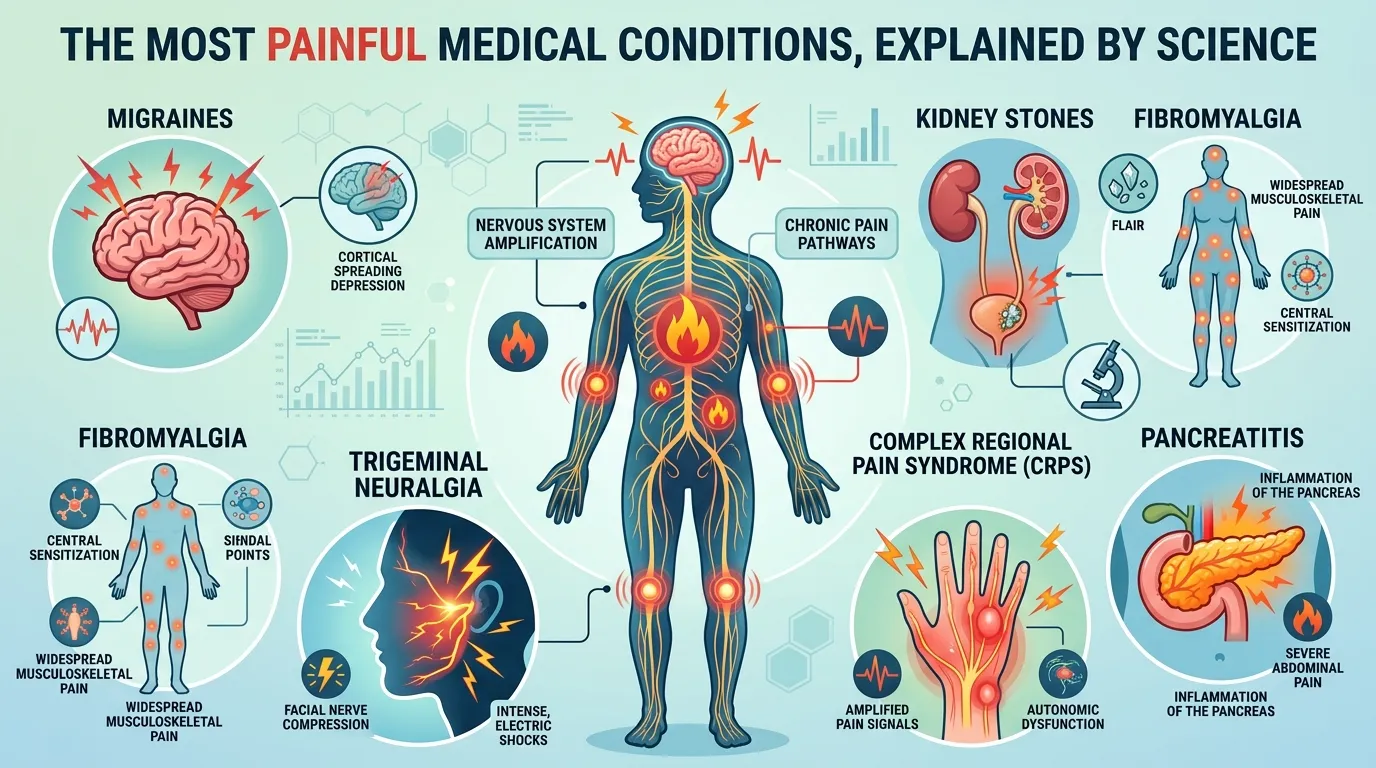
The most painful medical conditions include disorders such as cluster headaches, trigeminal neuralgia, CRPS, kidney stones, and shingles. Learning about their symptoms, causes, and treatment options can help patients manage pain and seek the right medical care.
Some of the most painful medical conditions include cluster headaches, trigeminal neuralgia, complex regional pain syndrome (CRPS), kidney stones, and shingles. These conditions are often ranked highest for pain intensity by patients and doctors due to the severity, frequency, and persistence of the pain they cause.
Pain is deeply personal. What feels unbearable to one person might be tolerable to another, which makes ranking pain a tricky business. Still, certain medical conditions stand out for their reputation among patients and physicians alike. These are the illnesses that send people to the emergency room, disrupt sleep for years, and sometimes reshape entire lives.
In this guide, we’ll explore the most painful diseases and disorders known to medicine. You’ll learn what causes severe chronic pain, which nerve conditions produce the most extreme sensations, and what treatment options exist for those living with these illnesses. Whether you’re researching for yourself, a loved one, or out of curiosity, this list will help you understand the science behind some of the worst pain a human body can experience.
A quick note before we begin: this article is for informational purposes only. If you or someone you know is dealing with severe pain, please consult a qualified medical professional.
How Do Doctors Measure Pain?

Measuring pain is harder than it sounds. There’s no blood test or scan that delivers a precise number. Instead, doctors rely on tools like the numeric rating scale, where patients rate their pain from 0 to 10, and the McGill Pain Questionnaire, which uses descriptive words to capture pain quality and intensity.
Researchers also study how often pain occurs, how long it lasts, and how much it interferes with daily life. A condition that causes brief but blinding pain may rank differently than one that produces a constant, dull ache for decades. Both can be devastating in their own way.
With that context in mind, let’s look at the conditions that consistently top the charts for pain severity.
What Are the Most Painful Nerve Conditions?
Nerve-related pain, also called neuropathic pain, is often described as some of the worst pain imaginable. When nerves misfire or become damaged, they can send relentless signals of agony to the brain.
Trigeminal Neuralgia
Often nicknamed the “suicide disease” because of its historic association with despair, trigeminal neuralgia affects the trigeminal nerve, which carries sensation from the face to the brain. Sufferers describe sudden, electric-shock-like jolts of pain in the face, often triggered by something as simple as brushing teeth, eating, or a light breeze.
The episodes are brief, lasting seconds to minutes, but they can occur in rapid succession. Treatment usually starts with anticonvulsant medications like carbamazepine, and in severe cases, surgical options such as microvascular decompression may be considered.
Complex Regional Pain Syndrome (CRPS)
Complex regional pain syndrome is a chronic pain condition that usually affects an arm or leg, often after an injury or surgery. What sets CRPS apart is how disproportionate the pain is to the original injury. A minor sprain can spiral into months or years of burning, throbbing pain.
CRPS often comes with swelling, changes in skin color and temperature, and extreme sensitivity. On the McGill Pain Index, CRPS is frequently ranked higher than amputation of a finger or childbirth. Early treatment with physical therapy, nerve blocks, and medications offers the best chance of recovery.
Postherpetic Neuralgia
This nerve condition is a complication of shingles. After the shingles rash heals, some people continue to experience burning, stabbing pain in the affected area, sometimes for months or years. The older a person is, the higher the risk. Vaccination against shingles is one of the most effective ways to prevent this painful aftermath.
Which Headache Disorders Cause the Most Pain?

Headaches range from mild annoyances to truly debilitating conditions. A few headache disorders are notorious for their intensity.
Cluster Headaches
Cluster headaches are widely regarded as one of the most painful conditions a person can experience. They produce intense, piercing pain around or behind one eye, often accompanied by tearing, a runny nose, and restlessness.
The attacks come in clusters, hence the name, sometimes striking multiple times a day for weeks. Many patients describe the pain as worse than childbirth or kidney stones. Treatments include high-flow oxygen therapy, triptan injections, and preventive medications like verapamil.
Migraines
Migraines affect roughly 1 billion people worldwide, according to the World Health Organization. They go far beyond a typical headache, often involving throbbing pain, nausea, vomiting, and extreme sensitivity to light and sound. Some people experience visual disturbances called auras before an attack.
For chronic migraine sufferers, the condition can be disabling. Newer treatments, including CGRP inhibitors, have offered relief to many who didn’t respond to older medications.
What Diseases Cause the Highest Levels of Pain?
Beyond nerve and headache disorders, several diseases are known for producing extreme physical pain.
Kidney Stones
Anyone who has passed a kidney stone will tell you it’s an experience they’d rather forget. These hard mineral deposits form in the kidneys and cause excruciating pain as they travel through the urinary tract. The pain often comes in waves and is frequently compared to childbirth.
Staying hydrated, managing diet, and in some cases medical procedures like lithotripsy can help prevent and treat kidney stones.
Pancreatitis
Pancreatitis is inflammation of the pancreas, and acute cases can cause severe, persistent abdominal pain that radiates to the back. The pain can be so intense that hospitalization is required. Causes include gallstones and heavy alcohol use, and treatment focuses on rest, pain management, and addressing the underlying cause.
Gout
Gout is a form of arthritis caused by a buildup of uric acid crystals in the joints, most commonly the big toe. Attacks can come on suddenly, often at night, with intense pain, redness, and swelling. Many sufferers say even the weight of a bedsheet on the affected joint is unbearable. Dietary changes and medications can manage and prevent flare-ups.
What Conditions Cause Severe Chronic Pain?
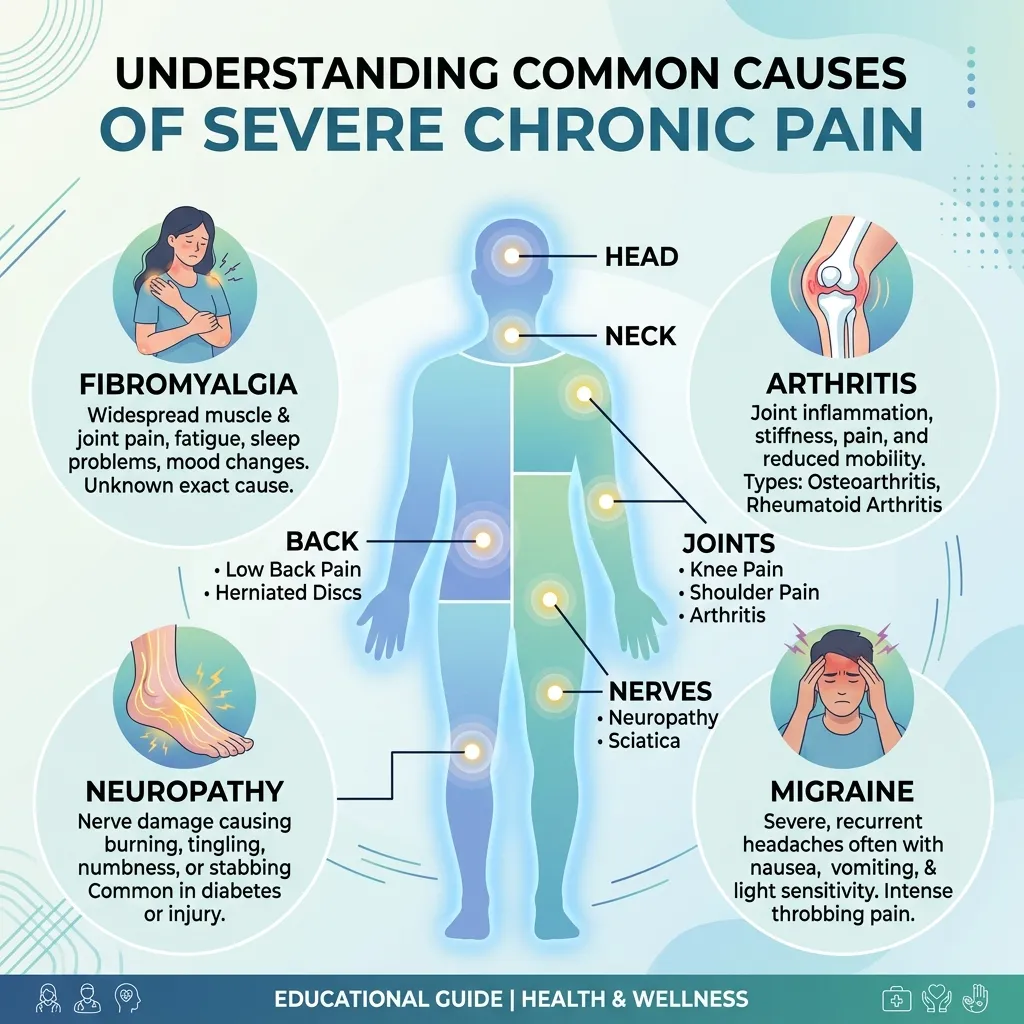
While some conditions cause sharp, acute pain, others produce ongoing chronic pain that lasts months or years. Chronic pain disorders can be especially challenging because they wear people down over time.
Fibromyalgia
Fibromyalgia causes widespread musculoskeletal pain, fatigue, and tenderness throughout the body. The exact cause isn’t fully understood, but researchers believe it involves how the brain and spinal cord process pain signals. People with fibromyalgia often experience sleep problems, brain fog, and mood issues alongside the pain.
There’s no cure, but a combination of medication, exercise, stress management, and therapy can help people manage symptoms.
Endometriosis
Endometriosis occurs when tissue similar to the lining of the uterus grows outside it. This can cause severe pelvic pain, especially during menstruation, along with fatigue and fertility problems. The condition affects an estimated 1 in 10 women of reproductive age, yet it often takes years to diagnose.
Treatment ranges from hormonal therapies to surgery, depending on severity.
Rheumatoid Arthritis
Unlike osteoarthritis, which results from wear and tear, rheumatoid arthritis is an autoimmune disease where the immune system attacks the joints. This leads to painful swelling, stiffness, and over time, joint damage. Early treatment with disease-modifying drugs can slow progression and reduce pain.
Painful Illnesses and Treatment Options
Living with a painful medical condition can feel isolating, but treatment options continue to improve. Here are some of the main approaches doctors use to manage severe pain:
- Medications: From over-the-counter pain relievers to prescription anticonvulsants, antidepressants, and opioids, drug therapy is often the first line of defense.
- Nerve blocks and injections: Targeted injections can interrupt pain signals for conditions like CRPS and certain types of neuralgia.
- Physical therapy: Movement and structured exercise can reduce pain and improve function, especially for chronic conditions.
- Surgery: In severe cases, procedures like microvascular decompression or stone removal can address the root cause.
- Lifestyle changes: Diet, hydration, stress management, and sleep all play a role in managing many painful conditions.
- Mind-body approaches: Techniques like cognitive behavioral therapy, meditation, and acupuncture can help people cope with chronic pain.
The best approach depends on the specific condition, its cause, and the individual. A pain management specialist can help build a personalized treatment plan.
Living With Severe Pain: Where to Go From Here
Pain may be impossible to rank perfectly, but conditions like cluster headaches, trigeminal neuralgia, CRPS, kidney stones, and shingles consistently rank among the most agonizing experiences a person can face. Understanding what causes this pain is the first step toward finding relief.
If you’re dealing with severe or chronic pain, don’t try to tough it out alone. Talk to your doctor about your symptoms, ask about pain management specialists, and explore the treatment options available. Modern medicine has more tools than ever to help people live fuller, less painful lives.
Frequently Asked Questions
What is considered the most painful medical condition?
There’s no single answer, since pain is subjective. However, cluster headaches, trigeminal neuralgia, and complex regional pain syndrome (CRPS) are frequently cited by both patients and doctors as among the most painful conditions. CRPS in particular ranks very high on the McGill Pain Index.
What causes severe chronic pain?
Severe chronic pain can result from nerve damage (neuropathic pain), inflammation, autoimmune diseases, and conditions where the nervous system processes pain abnormally, such as fibromyalgia. Injuries, infections, and certain diseases like rheumatoid arthritis and endometriosis are also common causes.
Is childbirth more painful than kidney stones?
Many people who have experienced both describe the pain as comparable. Some report that passing a kidney stone is just as intense, or even worse, than childbirth. Because pain perception varies from person to person, there’s no definitive answer.
Can the most painful conditions be cured?
It depends on the condition. Some, like kidney stones, can be treated and resolved completely. Others, like fibromyalgia and CRPS, have no cure but can often be managed with the right combination of treatments. Early diagnosis usually improves outcomes.
When should I see a doctor about pain?
You should see a doctor if your pain is severe, lasts longer than a few days, interferes with daily activities, or comes with other concerning symptoms like fever, swelling, or numbness. Sudden, intense pain always warrants prompt medical attention.