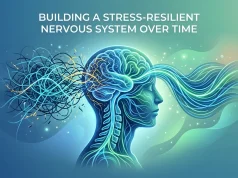

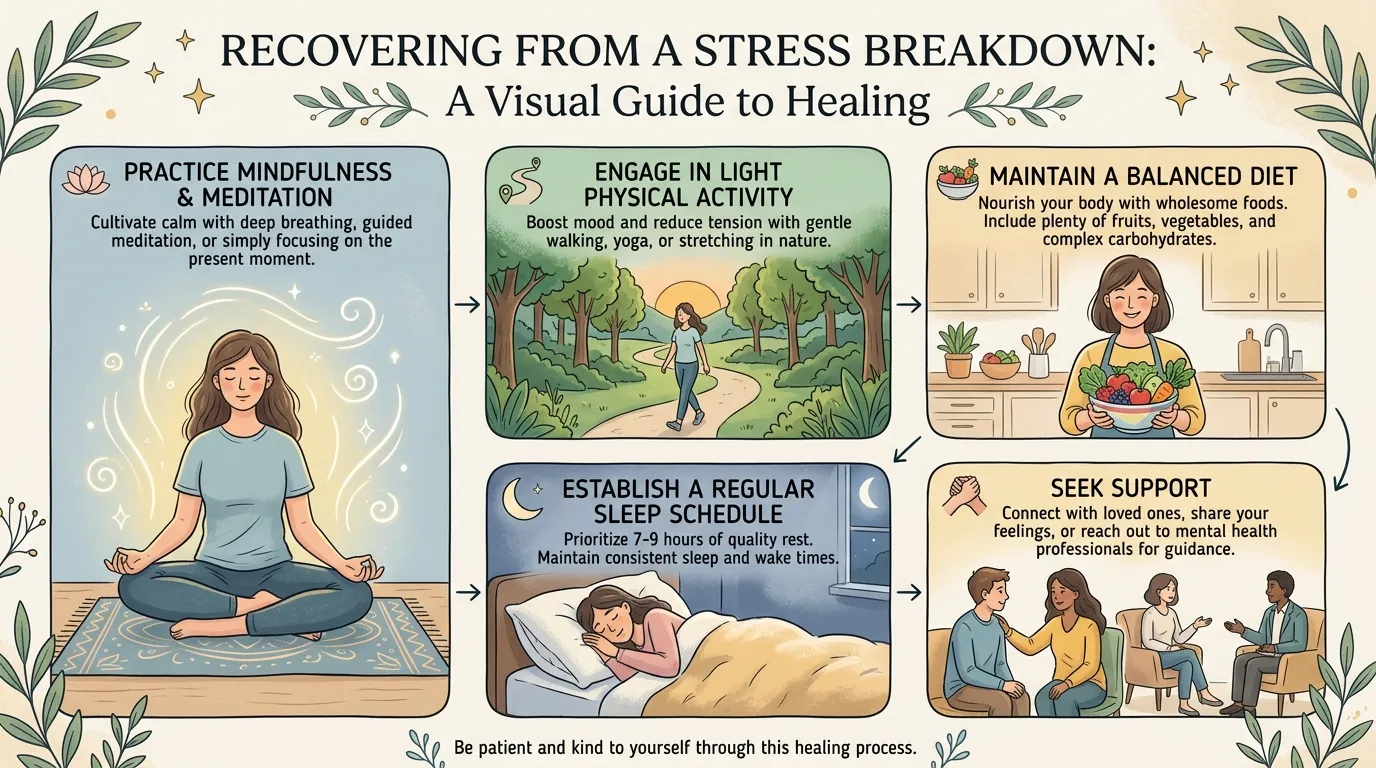
Stress breakdown recovery is a gradual process that focuses on calming the nervous system, recovering from emotional exhaustion, and building healthy habits to prevent future burnout. By combining stress management techniques, quality sleep, emotional support, and sustainable lifestyle changes, individuals can improve resilience and restore their mental and physical well-being.
Stress breakdown recovery involves stabilizing your nervous system, addressing emotional exhaustion, and building sustainable habits that prevent relapse. Recovery is not linear—most people need a combination of physical rest, emotional processing, and structured stress management strategies to fully heal from chronic stress.
There’s a moment many people recognize: you wake up one morning and your body simply refuses to cooperate. The exhaustion is bone-deep. Motivation has vanished. Emotions swing without warning. You might cry in the shower, snap at someone you love, or stare blankly at a screen for an hour without processing a single word.
This is what a stress breakdown looks like in real life. Not a dramatic collapse, but a quiet shutdown—your mind and body hitting a wall after months or years of running on empty.
Stress breakdown recovery is rarely discussed with the seriousness it deserves. People talk about “self-care” and “taking breaks,” but surviving a stress breakdown requires more than a weekend off. The path back involves understanding what actually happened to your nervous system, addressing the emotional damage, and building a recovery framework that prevents it from happening again.
This guide covers exactly that. From nervous system recovery to burnout recovery strategies, you’ll find practical, evidence-based techniques for healing from chronic stress—and reclaiming a life that feels manageable again.
What Is a Stress Breakdown, and Why Does It Happen?
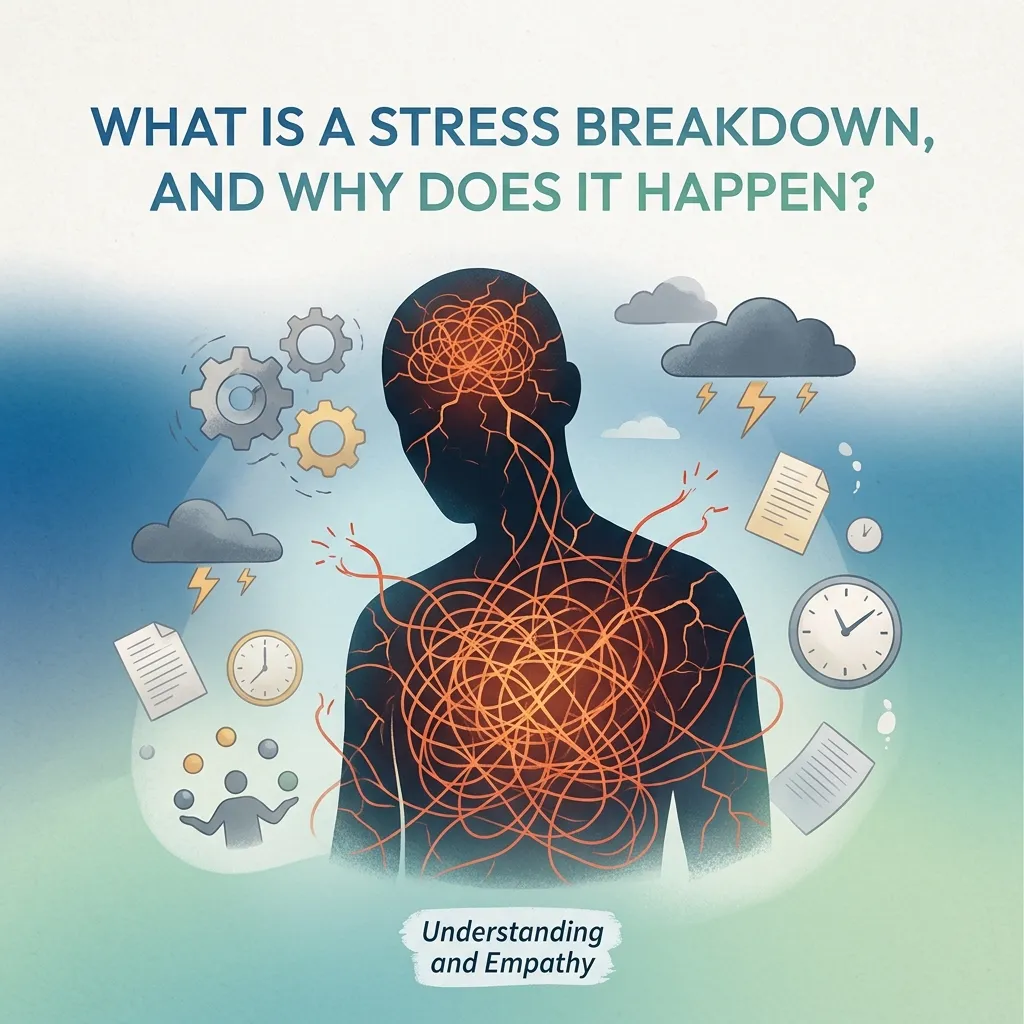
A stress breakdown—sometimes called an emotional breakdown or mental health crisis—occurs when accumulated psychological and physical stress exceeds your capacity to cope. Unlike a single bad day, a stress breakdown typically follows a prolonged period of chronic stress that has quietly depleted your emotional, cognitive, and physiological reserves.
The American Psychological Association (APA) defines chronic stress as stress that persists over an extended period, often tied to ongoing situations like financial pressure, workplace demands, caregiving responsibilities, or relationship conflict. Over time, chronic stress dysregulates the body’s hypothalamic-pituitary-adrenal (HPA) axis—the system responsible for producing cortisol and managing the fight-or-flight response.
When cortisol levels remain elevated for too long, the body begins to break down. Sleep deteriorates. The immune system weakens. Emotional regulation becomes harder. Eventually, even small stressors can trigger an outsized reaction—because the system that normally absorbs stress has nothing left to give.
Understanding this is the first step in stress breakdown recovery. You are not weak. Your nervous system became overwhelmed. And like any overloaded system, it needs a structured recovery process—not just rest.
Step 1: Nervous System Recovery — Stabilizing Before Anything Else
Before addressing mindset, habits, or emotional processing, your priority after a stress breakdown should be nervous system recovery. An overactivated nervous system keeps your body in a perpetual state of threat response, making it nearly impossible to think clearly, sleep properly, or regulate emotions.
How do you calm an overactivated nervous system?
Physiological sighing is one of the fastest, research-backed methods for reducing acute stress. A double inhale through the nose followed by a long exhale through the mouth activates the parasympathetic nervous system within seconds. According to a 2023 study published in Cell Reports Medicine, physiological sighing performed for five minutes daily produced greater reductions in anxiety and negative affect than mindfulness meditation or box breathing over a four-week period.
Cold water exposure — even briefly splashing cold water on your face — triggers the dive reflex, slowing heart rate and reducing cortisol. This is especially useful during moments of acute overwhelm.
Progressive muscle relaxation (PMR) involves tensing and releasing muscle groups sequentially, helping the body release accumulated physical tension. Clinical research consistently supports PMR as an effective stress relief technique for both acute and chronic stress.
The goal of this phase is not to fix everything—it is to stop the physiological spiral so that real recovery can begin.
Step 2: Emotional Burnout Recovery — Processing What You’ve Been Carrying
Nervous system stabilization creates space. Emotional burnout recovery fills it. This is where most people skip steps, jumping back into productivity before they’ve actually processed what led to the breakdown.
What does emotional exhaustion feel like, and how long does it last?
Emotional exhaustion—a hallmark of burnout—manifests as chronic fatigue, emotional detachment, reduced empathy, and a pervasive sense of dread about daily responsibilities. According to research by Christina Maslach, whose Maslach Burnout Inventory is the most widely used tool in burnout assessment, emotional exhaustion is the first and most critical dimension of burnout to address in recovery.
Recovery from emotional exhaustion rarely happens in days. Most people need weeks to months of consistent effort before they notice meaningful improvement. Trying to rush this stage typically extends it.
Practical strategies to recover from emotional exhaustion include:
- Journaling with structure: Rather than freewriting, use prompts that help you identify specific stressors, emotions, and unmet needs. Questions like “What have I been tolerating that I shouldn’t be?” or “What did I need this week that I didn’t allow myself to have?” are more productive than open-ended reflection.
- Boundary setting as a recovery tool: Burnout recovery strategies consistently highlight the restoration of boundaries as essential. This means identifying where your energy is leaking—commitments, relationships, digital consumption—and deliberately reducing those drains.
- Grief work: Many stress breakdowns involve an element of loss—loss of an identity, a relationship, a version of your life you expected to have. Naming and grieving those losses, ideally with a therapist, accelerates emotional recovery.
Step 3: Stress Recovery Techniques for Daily Life
Once your nervous system is more stable and emotional processing is underway, daily stress recovery techniques become the backbone of sustained healing from chronic stress.
Which stress recovery techniques are most effective for long-term healing?
Sleep as a non-negotiable: Sleep is when the brain consolidates memory, regulates emotion, and clears metabolic waste products including cortisol. The National Sleep Foundation recommends 7–9 hours for adults, but during stress breakdown recovery, some people find they need more. Resist the urge to cap sleep with an alarm if your schedule allows.
Movement calibrated to your capacity: Intense exercise can further tax an already depleted nervous system. During early stress breakdown recovery, low-intensity movement—walking, yoga, gentle swimming—is far more supportive than high-intensity training. As your capacity builds, you can gradually reintroduce more vigorous exercise.
Social connection without performance: Isolation often accompanies burnout, but superficial social interaction can be equally draining. Prioritize time with people around whom you don’t feel the need to perform or explain yourself. Even brief, genuine connection has measurable effects on cortisol and oxytocin levels.
Nutrition and blood sugar stability: Chronic stress depletes magnesium, B vitamins, and vitamin C. Blood sugar instability amplifies anxiety and emotional reactivity. Eating regularly—prioritizing protein, healthy fats, and complex carbohydrates—supports mood stability during mental stress recovery.
Step 4: Chronic Stress Management — Building a Structure That Holds
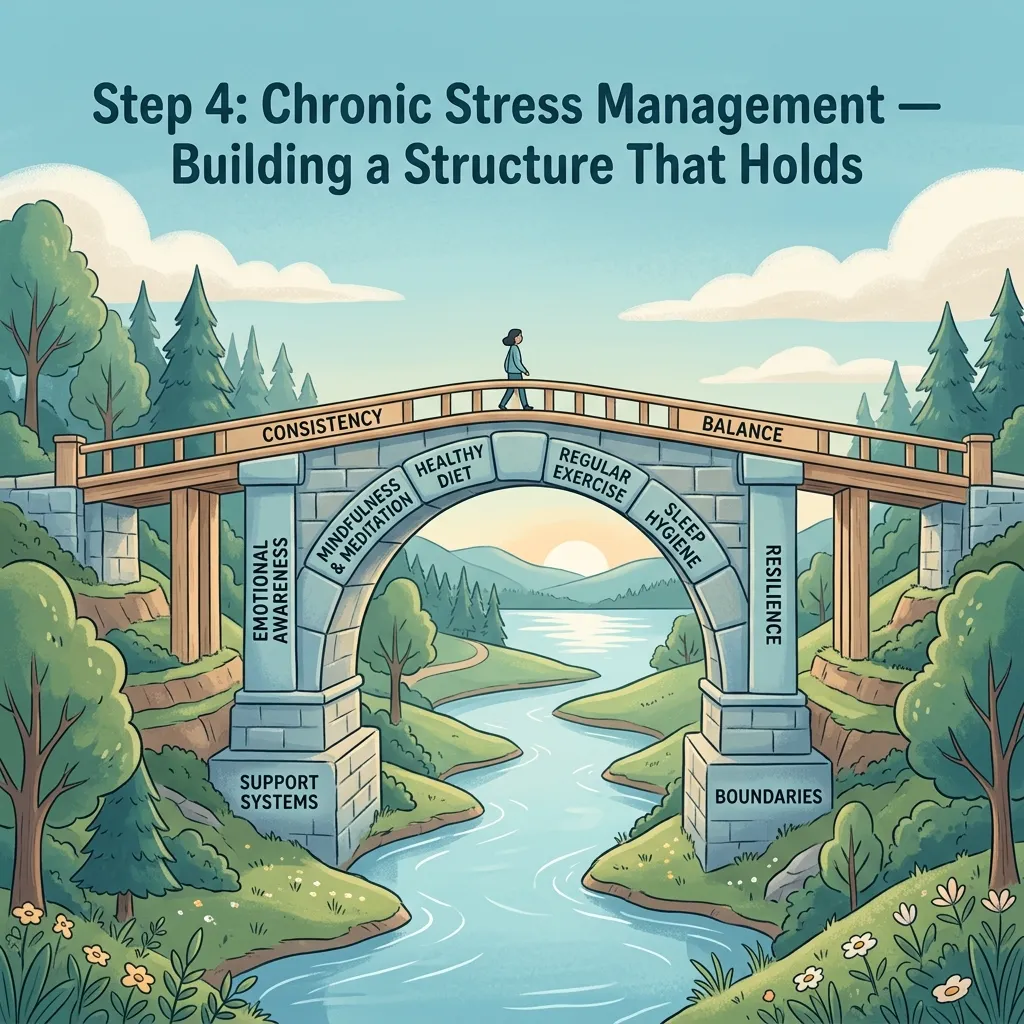
Recovery from a stress breakdown is not complete until you have addressed the conditions that caused it. This is chronic stress management: not just coping better, but restructuring how you live and work so that another breakdown becomes far less likely.
How do you prevent another stress breakdown after recovering?
Audit your stressors systematically: List every significant source of stress in your life—work, finances, relationships, health, environment. For each one, identify whether it is fixable, adaptable, or something you need to accept. This framework, drawn from cognitive behavioral stress management (CBSM), helps reduce the cognitive burden of unprocessed stress.
Develop a stress warning system: Most people in breakdown recovery report that, in hindsight, there were warning signs weeks or months before the breakdown. Common early signals include increased irritability, waking at 3–4 AM, reduced enjoyment of previously satisfying activities, and a tendency to catastrophize minor problems. Building self-awareness around your personal warning signs gives you an early intervention window.
Create recovery rituals, not just reactive responses: Stress management for mental health works best when it is proactive. Morning and evening rituals that regulate your nervous system—without requiring willpower in the moment—build resilience over time. These might include five minutes of breathing exercises, a short walk without your phone, or a brief journaling practice before bed.
Professional support: Therapy—particularly Cognitive Behavioral Therapy (CBT), Acceptance and Commitment Therapy (ACT), or somatic approaches—is one of the most consistently effective burnout recovery strategies available. If access to therapy is limited, structured self-help programs based on these modalities have demonstrated clinical efficacy.
Step 5: Mental Stress Recovery — Rebuilding Your Relationship with Your Mind
The final phase of stress breakdown recovery involves something more subtle: changing the mental patterns that contributed to the breakdown. For many people, a stress breakdown is partly caused by chronic self-criticism, perfectionism, difficulty asking for help, or an inability to tolerate uncertainty.
Mental stress recovery means recognizing these patterns—not to blame yourself for having them, but to begin building more flexible ways of thinking.
Self-compassion practice, as researched extensively by Dr. Kristin Neff at the University of Texas, has been shown to reduce emotional burnout, increase resilience, and improve overall psychological well-being. Self-compassion does not mean lowering standards—it means responding to your own suffering with the same care you would offer a close friend.
Cognitive defusion techniques from ACT help create distance from unhelpful thought patterns. Rather than accepting thoughts like “I can’t handle this” as facts, defusion helps you observe them as mental events—passing, not definitive.
You Don’t Recover From a Stress Breakdown Overnight — But You Do Recover
Healing from chronic stress takes time, consistency, and—crucially—patience with yourself. Stress breakdown recovery is not a straight line. Some days will feel like backslides. That’s normal, and it doesn’t erase the progress you’ve made.
The most important shift you can make is from managing symptoms to addressing root causes. Rest matters. So does processing emotion, rebuilding nervous system resilience, and creating a life with more sustainable demands.
If you’re in the middle of a stress breakdown right now, start small. One breathing technique. One honest conversation. One night of protected sleep. Recovery doesn’t begin when you have everything figured out—it begins with the next small decision you make in your own favor.
Frequently Asked Questions
How long does stress breakdown recovery take?
Recovery timelines vary significantly depending on the severity of burnout, the presence of underlying mental health conditions, access to support, and lifestyle changes made during recovery. Mild to moderate burnout may improve within 4–12 weeks of consistent effort. Severe emotional exhaustion or breakdown can take 6–12 months or longer to fully resolve.
What is the difference between a stress breakdown and burnout?
Burnout is a state of chronic depletion, typically linked to prolonged workplace or caregiving stress, characterized by emotional exhaustion, depersonalization, and reduced efficacy. A stress breakdown is often the acute event that occurs when burnout—or any chronic stress—reaches a tipping point. Burnout can exist without a breakdown, but breakdowns commonly occur in the context of advanced burnout.
Can you recover from chronic stress without therapy?
Many people recover from mild to moderate stress breakdowns without formal therapy, using structured self-help strategies, social support, lifestyle changes, and stress relief techniques. However, therapy significantly accelerates recovery and is strongly recommended for those experiencing severe emotional breakdown, suicidal thoughts, or co-occurring mental health conditions.
What are the first signs that you’re recovering from a stress breakdown?
Early signs of recovery include improved sleep quality, reduced emotional reactivity, the return of enjoyment in small activities, and a greater capacity to tolerate uncertainty or inconvenience without disproportionate distress. Many people also notice that their concentration and memory—often impaired during burnout—begin to improve as nervous system recovery progresses.
Is it normal to feel worse before you feel better during stress breakdown recovery?
Yes. As you slow down and begin processing what happened, suppressed emotions—grief, anger, sadness—often surface. This can feel like a setback, but it typically signals that your nervous system is shifting out of a state of hypervigilance and beginning to process what it had been holding. Gentle professional support during this phase can be particularly helpful.