
Optic neuropathy treatment depends on the cause. Options include corticosteroids for optic neuritis, blood pressure and blood sugar control for ischemic optic neuropathy, surgery to relieve pressure on the optic nerve, and supportive therapies to protect remaining vision. Early diagnosis by a neuro-ophthalmologist offers the best chance of recovery.
Losing vision—even partially—is frightening. When the cause is damage to the optic nerve, the path forward can feel uncertain. The optic nerve carries visual information from your eye to your brain, and when it’s harmed, the signal weakens or stops. The result can range from blurry patches to significant vision loss.
The good news? Many forms of optic nerve damage respond to treatment, especially when caught early. This guide walks through the main causes of optic neuropathy, the treatment options available today, and the emerging research that’s reshaping how doctors approach optic nerve health and recovery.
Whether you’ve just received a diagnosis or you’re supporting someone who has, understanding your options is the first step toward protecting the vision you have.
What is optic neuropathy?
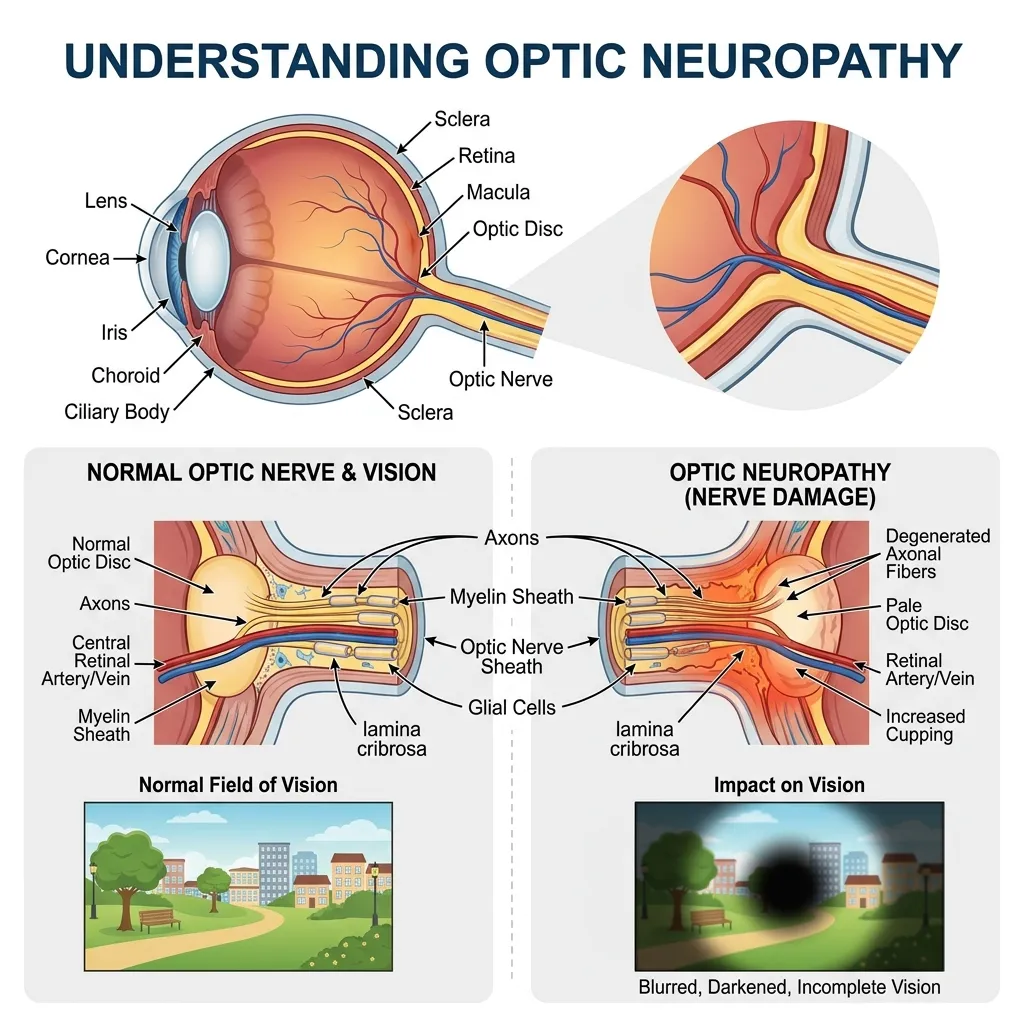
Optic neuropathy is a general term for any damage to the optic nerve. This damage interrupts the flow of visual signals between the eye and the brain, leading to symptoms like blurred vision, dimming colors, blind spots, or loss of peripheral vision.
The condition has many causes, and treatment varies depending on which one is at play. Common types include:
- Ischemic optic neuropathy: Caused by reduced blood flow to the optic nerve, often linked to high blood pressure, diabetes, or inflammation of blood vessels.
- Optic neuritis: Inflammation of the optic nerve, frequently associated with multiple sclerosis.
- Glaucomatous optic neuropathy: Damage caused by elevated pressure inside the eye.
- Traumatic optic neuropathy: Damage from a head or eye injury.
- Hereditary optic neuropathy: Genetic conditions such as Leber hereditary optic neuropathy.
- Toxic or nutritional optic neuropathy: Caused by exposure to certain toxins or deficiencies in nutrients like vitamin B12.
Because the right treatment hinges on the correct diagnosis, identifying the underlying cause is the most important first step in optic neuropathy management.
How do doctors diagnose optic nerve damage?
Before any treatment for optic nerve disorders begins, a neuro-ophthalmologist will run a series of tests to pinpoint the cause. Accurate diagnosis shapes every decision that follows.
Common diagnostic tools include:
- Visual field testing to map areas of vision loss.
- Optical coherence tomography (OCT), which produces detailed images of the optic nerve and retina.
- MRI scans to check for inflammation, tumors, or signs of conditions like multiple sclerosis.
- Blood tests to detect underlying issues such as vascular inflammation or nutritional deficiencies.
- Pupil response tests to measure how the optic nerve reacts to light.
Neuro-ophthalmology treatment services bring together expertise in both neurology and ophthalmology, which makes these specialists especially well-suited to untangle complex cases of optic nerve damage.
What are the treatment options for optic neuropathy?
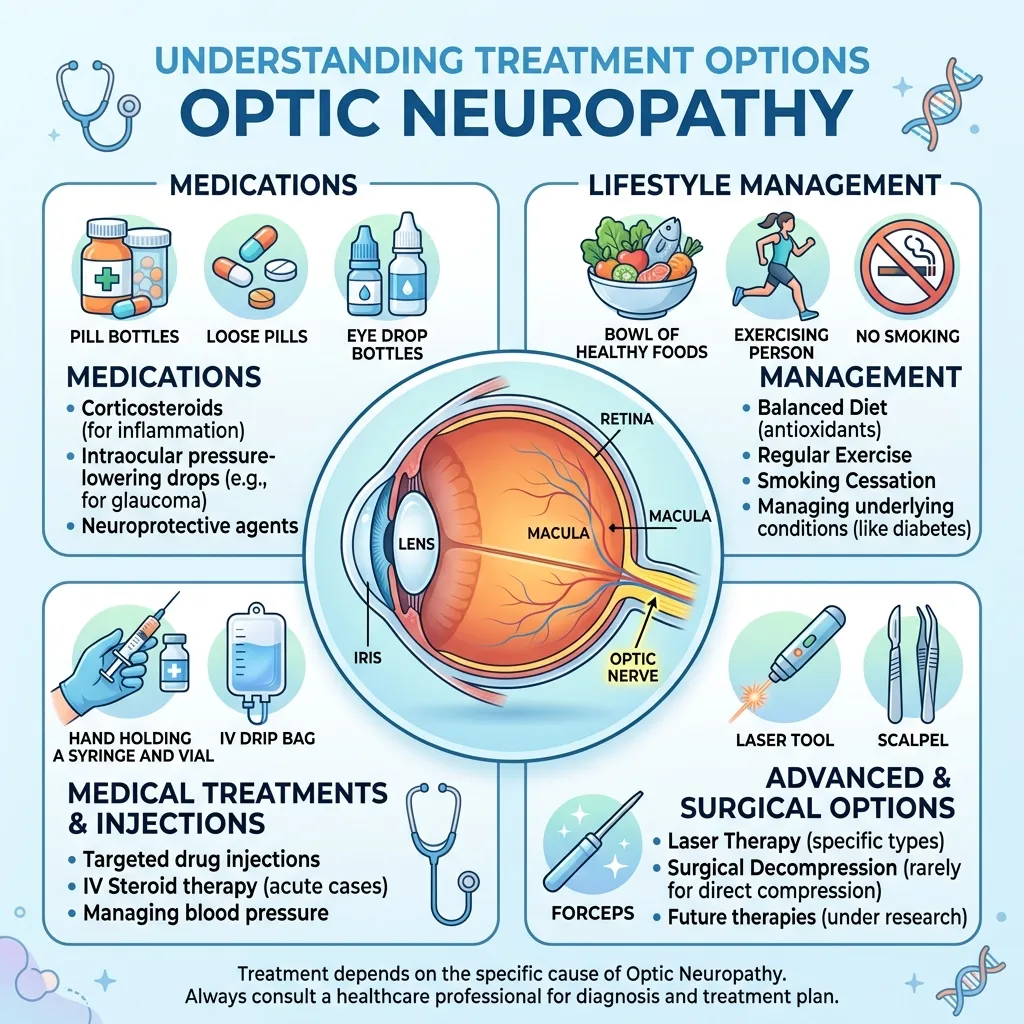
There is no single cure-all for optic neuropathy. Instead, treatment targets the specific cause while protecting the nerve fibers that remain healthy. Here are the main approaches.
Treating optic neuritis with corticosteroids
Optic neuritis treatment methods usually center on reducing inflammation. Corticosteroids—often delivered intravenously at first, then tapered through oral doses—can speed up recovery and reduce swelling around the optic nerve.
It’s worth noting that steroids tend to shorten the duration of an optic neuritis episode rather than change the final visual outcome for many patients. Still, faster recovery matters, and treatment also gives doctors a chance to screen for related conditions like multiple sclerosis. When optic neuritis links to MS, managing the underlying disease becomes part of the long-term plan.
Managing ischemic optic neuropathy
Ischemic optic neuropathy treatment focuses on the blood supply. Since this type stems from poor blood flow to the optic nerve, controlling the risk factors is central to care.
That means managing blood pressure, keeping blood sugar in check, addressing high cholesterol, and treating sleep apnea if it’s present. In cases of arteritic ischemic optic neuropathy—where inflamed arteries are to blame—high-dose corticosteroids are started urgently to protect the other eye from sudden vision loss. Quick action here can prevent a second, devastating event.
Surgical treatment for optic nerve disorders
Surgery isn’t the first choice for most optic neuropathies, but it has a clear role in certain situations. When a tumor, swelling, or bleeding presses on the optic nerve, surgical decompression can relieve that pressure and help preserve vision.
For glaucoma-related optic nerve damage, procedures that lower eye pressure—whether through laser treatment, drainage implants, or traditional surgery—help slow further harm. The goal in these cases is to protect what remains rather than reverse what’s already lost.
Treating toxic and nutritional optic neuropathy
When toxins or nutritional gaps cause optic nerve damage, the treatment is often straightforward: remove the offending substance and replace what’s missing. Stopping exposure to a toxin, correcting a vitamin B12 deficiency, or improving overall nutrition can halt the damage and, in some cases, allow partial recovery.
This is one of the more hopeful scenarios, because catching the cause early can prevent permanent loss.
Can the optic nerve regenerate?
This is the question at the heart of so much research—and the honest answer is complicated. The optic nerve is part of the central nervous system, and unlike some nerves in the body, it doesn’t naturally regenerate once damaged. That’s why prevention and early treatment matter so much.
But the landscape is shifting. Optic nerve regeneration therapy is one of the most active areas in vision science today.
What’s happening in optic nerve regeneration research?
Scientists are exploring several promising directions for repairing damaged optic nerves:
- Stem cell therapy: Researchers are studying whether stem cells can replace or support damaged retinal ganglion cells, the neurons that form the optic nerve.
- Gene therapy: For hereditary conditions like Leber hereditary optic neuropathy, gene-based treatments aim to correct the underlying genetic fault.
- Neuroprotective agents: These compounds aim to shield surviving nerve cells from further damage and keep them functioning longer.
- Regenerative biology: Lab studies are uncovering ways to “switch on” growth signals that encourage nerve fibers to regrow toward the brain.
Most of these therapies remain experimental and are not yet standard care. But the progress is real, and clinical trials are underway. For patients with conditions once considered untreatable, this research offers genuine reason for hope.
What vision loss treatment options exist beyond the nerve itself?
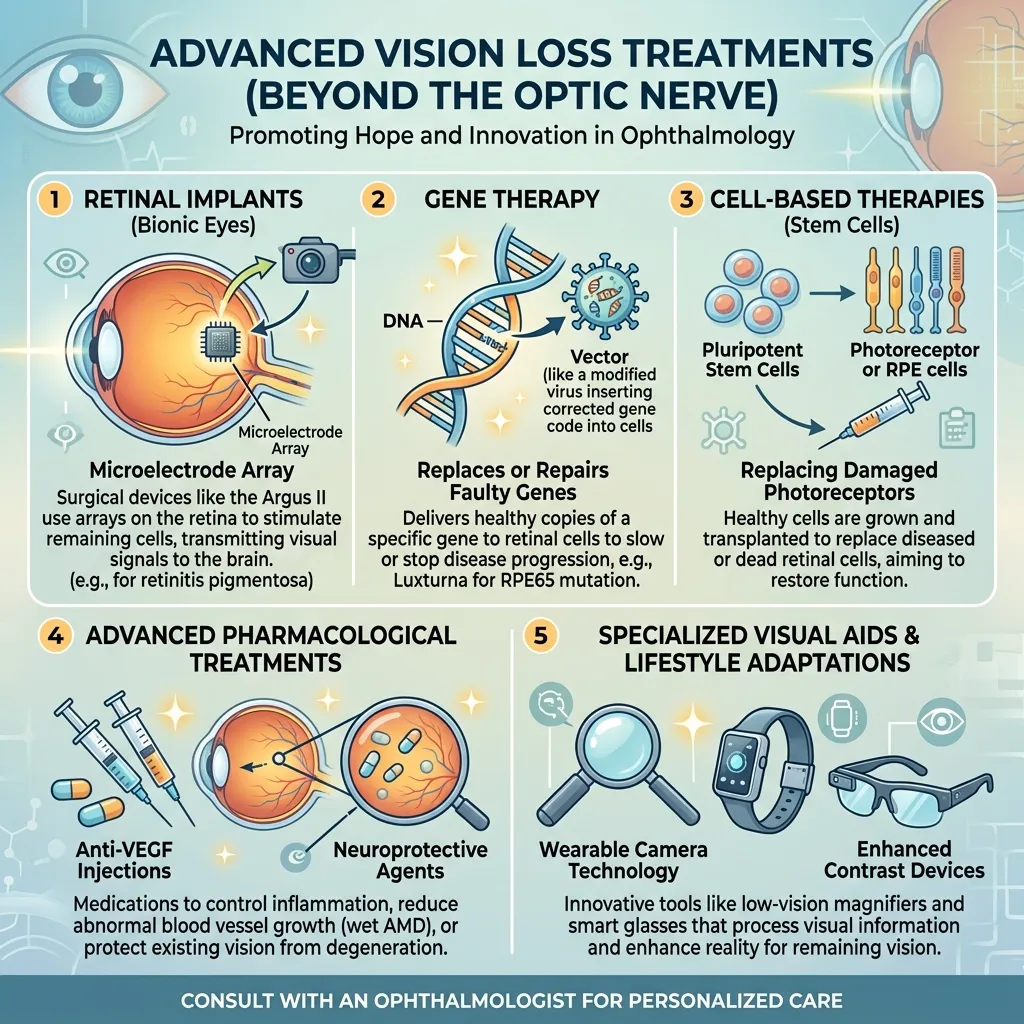
Treatment isn’t only about the optic nerve—it’s also about helping people live fully with the vision they have. Vision loss treatment options include practical support that makes a real difference day to day.
These supportive therapies include:
- Low-vision rehabilitation, which teaches strategies and skills for adapting to reduced sight.
- Magnification devices and assistive technology, from screen readers to specialized glasses.
- Occupational therapy to maintain independence at home and work.
- Counseling and support groups to address the emotional toll of vision loss.
Pairing medical treatment with these therapies for optic nerve damage gives patients the best quality of life, regardless of how much vision can be restored.
How can you support optic nerve health and recovery?
While not every cause of optic neuropathy is preventable, certain habits support optic nerve health and recovery and lower your risk of further damage:
- Manage chronic conditions like diabetes, high blood pressure, and high cholesterol.
- Don’t smoke, since smoking restricts blood flow and raises the risk of optic nerve damage.
- Eat a nutrient-rich diet with plenty of B vitamins, antioxidants, and leafy greens.
- Get regular eye exams, especially if you have a family history of optic nerve conditions or glaucoma.
- Protect your eyes from injury with proper safety gear during sports and risky activities.
- Report symptoms quickly. Sudden vision changes, eye pain, or color dimming warrant immediate medical attention.
Early detection remains your strongest tool. The sooner optic nerve damage is identified, the more treatment options stay on the table.
Taking the next step toward protecting your vision
Frequently asked questions
Can optic nerve damage be reversed?
In most cases, optic nerve damage cannot be fully reversed because the optic nerve does not naturally regenerate. However, some causes—such as inflammation, nutritional deficiencies, or pressure from a tumor—can be treated, which may restore partial or even significant vision if caught early. Emerging regeneration therapies may expand these possibilities in the future.
How long does optic neuropathy treatment take?
Treatment timelines vary by cause. Optic neuritis often improves over several weeks with corticosteroids, while managing ischemic optic neuropathy through blood pressure and blood sugar control is an ongoing, long-term process. Your neuro-ophthalmologist can give you a clearer timeline based on your specific diagnosis.
What kind of doctor treats optic neuropathy?
A neuro-ophthalmologist is the specialist best equipped to diagnose and treat optic neuropathy. These doctors are trained in both neurology and ophthalmology, which allows them to manage complex conditions affecting the optic nerve and its connection to the brain.
Is optic neuropathy a medical emergency?
Some forms can be. Sudden vision loss, especially when paired with eye pain or symptoms like jaw pain and headache, may signal arteritic ischemic optic neuropathy, which requires urgent treatment to protect the other eye. Always treat sudden vision changes as a reason to seek immediate medical care.
Does insurance cover optic neuropathy treatment?
Coverage depends on your plan and the specific treatment. Standard care like diagnostic testing, corticosteroids, and surgery is typically covered, while experimental therapies such as stem cell or gene treatments may not be. Check with your insurance provider and your care team about costs before starting treatment.