

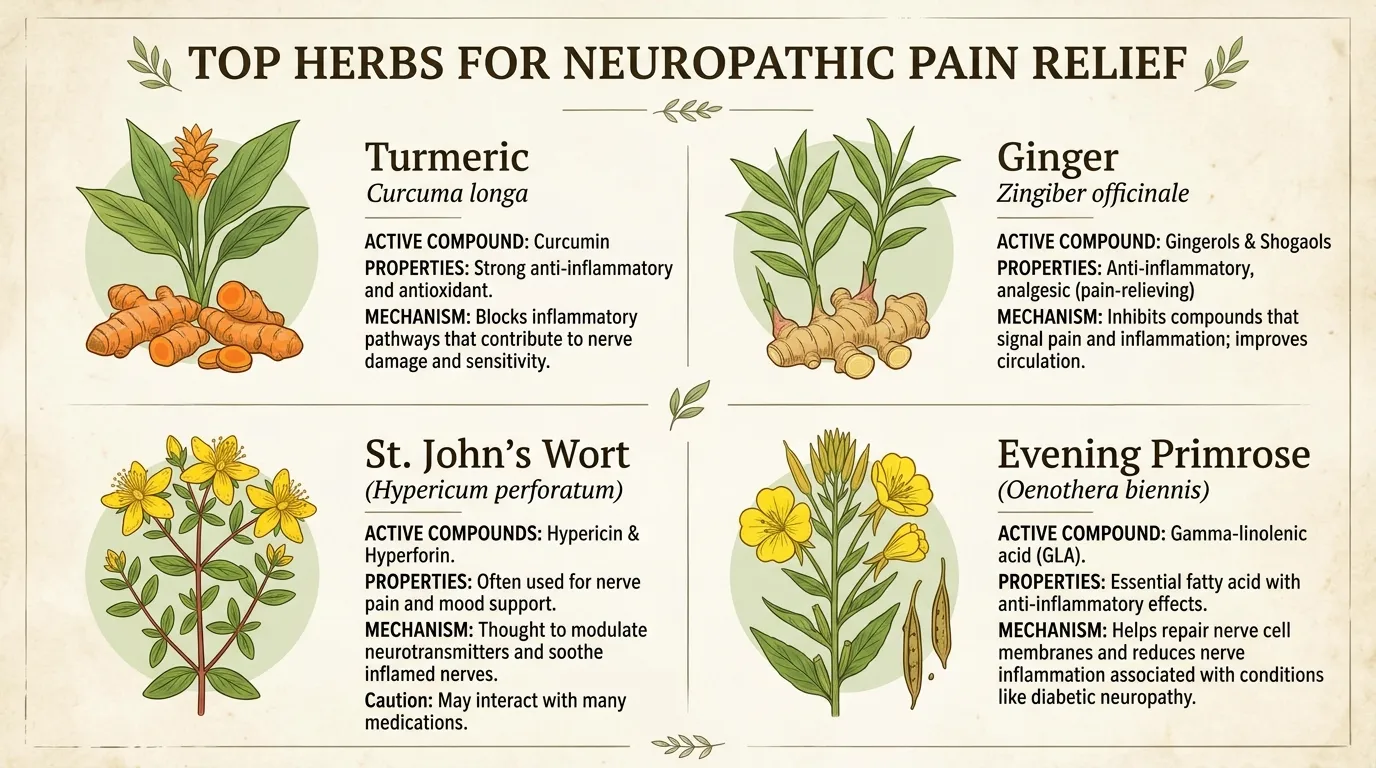
The most effective herbs for neuropathic pain include turmeric, St. John’s wort, and evening primrose oil. These natural remedies help reduce inflammation, improve blood flow, and support nerve healing. Patients should always consult healthcare providers before combining herbal supplements with traditional neuropathy treatments to avoid interactions.
Neuropathic pain affects millions of people globally, causing a distinct type of discomfort that patients often describe as burning, tingling, or shooting. Unlike typical muscle or joint pain, neuropathic pain stems from direct damage or dysfunction in the nervous system. Standard pharmaceutical treatments provide relief for many individuals. However, these conventional medications can carry significant side effects, leading patients to seek out alternative solutions.
The search for natural alternatives has brought traditional and herbal medicine into the spotlight. Plant-based therapies offer a holistic approach to managing nerve discomfort. Many herbs contain powerful bioactive compounds that target the root causes of nerve damage, such as chronic inflammation and oxidative stress. By incorporating specific plants into a daily wellness routine, individuals can often find meaningful relief without relying solely on synthetic drugs.
This comprehensive guide explores the most effective herbal treatments for neuropathy. You will learn about specific plant-based remedies, Ayurvedic solutions, and traditional medicine practices that support nerve regeneration. We will also cover practical home remedies and safety guidelines for using herbal supplements to manage peripheral neuropathy.
What are the best natural remedies for nerve pain relief?
Natural remedies for nerve pain relief encompass a wide variety of botanical and nutritional interventions. The goal of using natural remedies is to soothe the hyperactive pain signals traveling through damaged nerves. Certain herbs contain high concentrations of antioxidants, which neutralize free radicals that cause cellular damage in the nervous system.
Patients experiencing peripheral neuropathy frequently turn to evening primrose oil. Evening primrose oil contains gamma-linolenic acid (GLA), an omega-6 fatty acid known to improve nerve conduction and blood flow. Regular consumption of evening primrose oil has shown positive results in patients with diabetic neuropathy. Similarly, alpha-lipoic acid, while technically an antioxidant found in foods like spinach and broccoli, is often categorized alongside herbal treatments due to its profound ability to reduce nerve pain and numbness.
When exploring natural remedies for nerve pain relief, consistency is crucial. Natural compounds take time to accumulate in the body and repair damaged tissue. Healthcare providers typically recommend a steady regimen over several weeks before evaluating the true effectiveness of a specific natural remedy.
How does herbal treatment help with neuropathy pain?
Herbal treatment helps with neuropathy pain through multiple biological pathways. First, many herbs possess strong analgesic properties, meaning they naturally block pain receptors. Second, herbs frequently promote vasodilation. Vasodilation widens the blood vessels, allowing oxygen and essential nutrients to reach damaged peripheral nerves more efficiently.
St. John’s wort represents a prime example of an effective herbal treatment for neuropathy pain. Historically used for depression, St. John’s wort influences neurotransmitters like serotonin and norepinephrine. These neurotransmitters play a direct role in how the brain perceives pain. By modulating these chemicals, St. John’s wort can dull the sharp, burning sensations characteristic of nerve damage.
Another powerful mechanism of herbal treatment involves protecting the myelin sheath. The myelin sheath acts as a protective coating around nerve fibers. Herbs rich in specific vitamins and fatty acids support the structural integrity of the myelin sheath, preventing further degradation and encouraging slow regeneration of the nerve tissue.
Which are the best herbs for nerve damage healing?
Healing nerve damage requires herbs that actively stimulate cellular repair. Ginkgo biloba stands out as one of the best herbs for nerve damage healing. Ginkgo biloba drastically improves circulation, particularly to the extremities where peripheral neuropathy strikes hardest. Enhanced blood flow delivers the raw materials the body needs to rebuild compromised nerve structures.
Lion’s mane mushroom, though technically a fungus, is frequently included in herbal medicine discussions for nerve health. Lion’s mane stimulates the production of Nerve Growth Factor (NGF). Nerve Growth Factor is a specific protein crucial for the survival, maintenance, and regeneration of neurons. Regular supplementation with Lion’s mane can accelerate the repair of damaged nerves.
Oat straw is another excellent herb for nerve damage healing. Herbalists classify oat straw as a nervine trophorestorative, meaning it nourishes and restores the nervous system. Oat straw provides a high concentration of B vitamins and calcium, which soothe irritated nerve endings and promote long-term neurological health.
How can plant-based pain relief benefit peripheral neuropathy?
Plant-based pain relief benefits peripheral neuropathy by providing a gentler alternative to harsh pharmaceuticals. Heavy reliance on prescription nerve medications can lead to drowsiness, dizziness, and cognitive fog. Plant-based pain relief generally carries a lower risk of these disruptive side effects, allowing patients to maintain their quality of life and daily functionality.
A plant-based approach also emphasizes whole-body wellness. Dietary changes that incorporate a wide array of medicinal plants provide synergistic benefits. For instance, consuming a diet rich in leafy greens, berries, and nuts delivers an array of phytonutrients that collectively lower systemic inflammation.
Furthermore, plant-based topical treatments offer localized relief. Capsaicin, the active component in chili peppers, is heavily utilized for peripheral neuropathy. When applied to the skin, capsaicin depletes substance P, a chemical that transmits pain signals to the brain. Regular application of capsaicin cream provides substantial plant-based pain relief for localized nerve discomfort.
What are the top Ayurvedic herbs for neuropathic pain?
Ayurvedic medicine, an ancient healing system from India, offers several potent herbs for neuropathic pain. Ayurveda focuses on balancing the body’s life forces, and treating nerve disorders often involves herbs that pacify the “Vata” dosha, which governs the nervous system.
Ashwagandha ranks among the most revered Ayurvedic herbs for neuropathic pain. As an adaptogen, Ashwagandha helps the body manage physical and mental stress. It also possesses significant neuroprotective properties. Studies indicate that Ashwagandha can promote the regeneration of axons and dendrites, the communicative branches of nerve cells.
Turmeric, containing the active compound curcumin, is another staple of Ayurvedic medicine. Curcumin serves as one of the most powerful natural anti-inflammatories available. By reducing inflammation around compressed or damaged nerves, turmeric effectively mitigates neuropathic pain symptoms. To maximize absorption, individuals should always consume turmeric alongside black pepper.
Boswellia, also known as Indian frankincense, works exceptionally well when paired with turmeric. Boswellia inhibits the production of specific inflammatory molecules that contribute to nerve swelling and pain.
Which natural anti-inflammatory herbs protect the nerves?
Inflammation acts as a primary driver of nerve pain. Therefore, utilizing natural anti-inflammatory herbs is essential for protecting the nerves from further damage.
Ginger offers remarkable anti-inflammatory benefits. The active components in ginger, called gingerols, suppress inflammatory pathways in the body. Consuming ginger tea or taking ginger extract can reduce the systemic inflammation that exacerbates neuropathic pain.
Willow bark is another potent natural anti-inflammatory herb. Willow bark contains salicin, a chemical remarkably similar to aspirin. Salicin provides significant pain relief and reduces inflammation without causing the severe gastrointestinal distress sometimes associated with long-term aspirin use.
Devil’s claw, a plant native to southern Africa, also demonstrates strong anti-inflammatory properties. Herbalists frequently recommend Devil’s claw to treat nerve pain stemming from spinal issues, such as sciatica, because it effectively reduces inflammation in the surrounding tissues that press against the nerve root.
What home remedies work best for nerve pain management?
Home remedies for nerve pain management provide immediate, accessible ways to handle flare-ups. A warm Epsom salt bath serves as a highly effective home remedy. Epsom salts consist of magnesium sulfate. Magnesium acts as a natural muscle relaxant and nerve calmer. Soaking in an Epsom salt bath allows the skin to absorb magnesium directly, alleviating cramping and nerve spasms.
Essential oils offer another practical home remedy for nerve pain management. Peppermint oil contains high levels of menthol, which creates a cooling sensation that naturally overrides pain signals. Massaging diluted peppermint oil or lavender oil into the affected areas can soothe hyperactive nerves and promote relaxation.
Acupressure and self-massage techniques also belong in a home remedy toolkit. Gently massaging the hands and feet stimulates circulation and helps desensitize hypersensitive nerve endings.
Are herbal supplements safe for peripheral neuropathy?
Herbal supplements for peripheral neuropathy are generally safe when used correctly, but patients must exercise caution. “Natural” does not automatically mean “harmless.” Many herbs contain powerful active ingredients that can interact negatively with prescription medications.
For example, St. John’s wort interacts with dozens of common medications, including blood thinners, antidepressants, and heart medications. Ginkgo biloba can increase the risk of bleeding if taken alongside anticoagulant drugs. Therefore, safety depends entirely on an individual’s unique health profile and current medication regimen.
To ensure safety, individuals should purchase herbal supplements from reputable manufacturers that conduct third-party testing for purity and potency. Patients must consult with a neurologist, primary care physician, or a certified herbalist before introducing new herbal supplements for peripheral neuropathy into their treatment plan.
How is traditional medicine used for nerve pain relief?
Traditional medicine for nerve pain relief often combines herbal treatments with physical therapies to achieve holistic healing. Traditional Chinese Medicine (TCM), for example, views nerve pain as a stagnation of blood and “Qi” (vital energy).
To resolve this stagnation, Traditional Chinese Medicine heavily relies on acupuncture. Acupuncture involves inserting ultra-thin needles into specific points on the body to stimulate the nervous system and release natural painkillers, like endorphins. When acupuncture is paired with traditional Chinese herbal formulas—such as Corydalis, a known natural analgesic—patients often experience profound nerve pain relief.
Native American traditional medicine utilizes various localized botanicals. For instance, topically applying evening primrose or utilizing specific tree barks helped indigenous populations manage chronic pain conditions long before modern pharmacology existed. These traditional medicine systems emphasize that treating nerve pain requires addressing the whole patient, rather than just masking the symptoms.
What are other natural ways to reduce neuropathic pain symptoms?
Beyond herbs, several other natural ways to reduce neuropathic pain symptoms involve lifestyle and dietary modifications.
Regular, low-impact exercise remains one of the best natural treatments for neuropathy. Activities like swimming, cycling, and yoga improve blood circulation to the extremities, feeding damaged nerves. Exercise also releases endorphins, the body’s natural painkillers, which elevate mood and decrease pain perception.
Regulating blood sugar is a critical natural way to reduce neuropathic pain symptoms, particularly for those with diabetic neuropathy. High blood sugar levels actively destroy nerve fibers. Maintaining a balanced diet low in refined sugars and high in fiber protects the nerves from further glucose-induced damage.
Prioritizing sleep hygiene also impacts pain levels. The body performs the majority of its cellular repair during deep sleep. Creating a restful environment and maintaining a consistent sleep schedule gives the nervous system the time and energy required to heal.
Taking the Next Step in Nerve Health
Managing neuropathic pain requires patience, persistence, and a willingness to explore multiple avenues of healing. While the sharp, burning sensations of nerve damage can feel overwhelming, nature provides a robust pharmacy of herbs and botanicals capable of bringing genuine relief. Turmeric, evening primrose oil, and Lion’s mane mushroom offer powerful mechanisms for reducing inflammation and supporting nerve regeneration.
If you suffer from chronic nerve discomfort, consider integrating these natural remedies into your routine. Start by evaluating your current diet and lifestyle, and identify one or two herbal supplements that align with your specific symptoms. Always schedule a consultation with your healthcare provider to discuss your interest in herbal medicine. By combining professional medical guidance with the healing power of plants, you can take control of your neuropathic pain and significantly improve your daily quality of life.
Frequently Asked Questions
Can neuropathic pain be completely cured with herbs?
Herbs typically manage symptoms and support nerve regeneration rather than providing a complete cure. The effectiveness of herbs depends on the underlying cause of the nerve damage. While herbs can significantly reduce pain and improve function, conditions like diabetic neuropathy require comprehensive medical management alongside herbal support.
How long does it take for herbal supplements to relieve nerve pain?
Herbal supplements usually take between three to six weeks of consistent use to produce noticeable results. Unlike fast-acting pharmaceutical painkillers, herbs work gradually by reducing systemic inflammation and repairing cellular damage. Patients should maintain a steady regimen for at least a month before determining if a specific herb is effective.
What is the best herb to take for diabetic neuropathy?
Evening primrose oil is widely considered one of the best herbs for diabetic neuropathy. It contains high levels of gamma-linolenic acid (GLA), which clinical studies have shown to improve nerve conduction velocity and reduce nerve pain in diabetic patients. Alpha-lipoic acid is also highly recommended for this specific condition.
Are topical herbal creams effective for shooting nerve pain?
Yes, topical herbal creams are highly effective for localized shooting nerve pain. Creams containing capsaicin (derived from chili peppers) or peppermint oil provide immediate, localized relief. These creams work by desensitizing nerve endings and blocking the transmission of pain signals directly at the site of discomfort.
Can I take herbal supplements while on prescription nerve medication?
You should never mix herbal supplements with prescription nerve medication without explicit approval from a doctor. Certain herbs can amplify the side effects of prescription drugs or alter how the liver metabolizes medications. Always provide your healthcare provider with a complete list of any natural remedies you plan to use.
What are the best herbs for neuropathic pain relief?
Turmeric, evening primrose oil, St. John’s wort, ginkgo biloba, lion’s mane mushroom, ginger, and ashwagandha are commonly used for nerve pain support.
How do herbs help with neuropathic pain?
They reduce inflammation, improve blood circulation, and support nerve repair and regeneration.
Can herbal remedies cure neuropathic pain completely?
No, herbs help manage symptoms and support nerve health but do not usually cure the underlying condition.
How long do herbal treatments take to work for nerve pain?
Most people notice improvements within 3 to 6 weeks of consistent use.
Is turmeric good for neuropathic pain?
Yes, turmeric contains curcumin, a strong anti-inflammatory compound that may reduce nerve pain and swelling.
What herb improves nerve regeneration?
Lion’s mane mushroom is known for supporting nerve growth factor (NGF), which helps nerve repair.
Are herbal supplements safe for neuropathy?
Generally yes, but they may interact with medications, so medical guidance is recommended.
Can I take herbs with prescription nerve medications?
Only under a doctor’s supervision, as some herbs can interfere with drug effectiveness.
What is the best natural oil for nerve pain?
Evening primrose oil is commonly used for diabetic and peripheral neuropathy support.
Do topical herbal creams help nerve pain?
Yes, creams with capsaicin or peppermint oil can provide localized relief from burning or shooting pain.